A U.S. energy blockade, a barebones economy, and rising disease is crippling Cuban lives. A million have left since 2025.
By Johannes Werner
Original Air Date: Nov. 26, 2026
Host: Sarasota is located exactly halfway between Tallahassee and Havana, and history has made it clear that whatever happens in Cuba makes ripples here. Which helps explain why humanitarian grassroots action for Cuba is jelling right here, right now in Southwest Florida. Much of this growing local action emerges from religious beliefs. WSLR News talked with two locals who are engaging with the island.
Johannes Werner: Since January, the Trump administration has been blocking oil and fuel shipments to Cuba from third countries, including from Venezuela, Mexico or Russia.
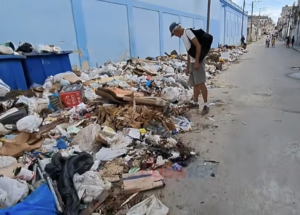
Trash is piling up in the streets of Havana, as the city has run out of diesel for its garbage trucks. | Screenshot via CubaNet
Regular Cubans feel the effects of this energy blockade with their own bodies. For one, it has produced extended blackouts, with just 15-20 hours of electricity per week. That lack of power means drinking water is shut off for hours on end every day. The City of Havana also ran out of diesel for its garbage trucks, which means waste is now piling up in the streets of the capital city. And that smelly fact, combined with rotting food in fridges and freezers, has made sudden vomiting and diarrhea rampant. Norovirus has become a companion of daily life for Cubans.
Manny Lopez lives in Nokomis. He grew up in Key West, one generation removed from family members who fled Cuba’s war of independence in the 1890s. Some of his extended family lost their small farms in Cuba after 1959, but he still has relatives and friends in the island. He shared observations, comparing his last two trips to Havana this January and October—literally talking trash.
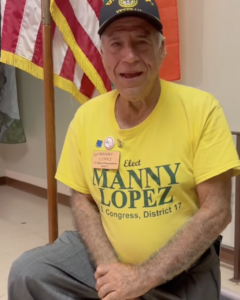
Manny Lopez ran for Congress in District 17 two years ago. | Photo screenshot Lopez for Congress
Manny Lopez: When I was there in January—even a year ago—trash was everywhere. Trash pickup, almost nonexistent. Every street corner and neighborhood has trash piles. But when I was there in January—and this is in the business district, too, on the main streets of Havana—but when I was there in January, the trash piles were, like, 15 to 20 feet in diameter and five to seven feet high in certain areas. And when you add stuff to the top, the base grows. This time, the footprint was 30 to 40 feet wide.
JW: Manny Lopez actually came down with the Norovirus. That experience reinforced his desire to help Cubans. Before his last trip, he asked his political friends at the Venice Area Democratic Club for help. Lopez got a local organization called Florida Veterans for Common Sense involved, and he tried to get local hospitals to donate surplus medical supplies. He is also in touch with a small Spanish-speaking church in Sarasota that happens to be led by a Cuban-born pastor. All that quickly snowballed into a logistical challenge.
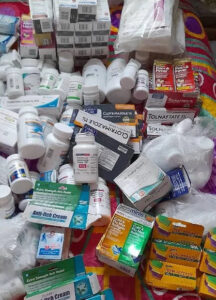
A shipment of medical donations. | Courtesy Christ for Cuba
ML: I went to them and said, “Hey, look. I’m going.” Chris and I had been funding everything that we send. I said, “Well let me see if they’ll donate a few things.” Well, that “few things” turned out to a whole bedroom full of things, which was wonderful but far more than I could take.
JW: During his last trip, he took 300 pounds of humanitarian donations with him on a commercial flight—which is the most expensive way to get goods to the island. So he reached out for help from Jorge Ignacio Fernandez, a part-time resident of Longboat Key, a board member of the Sarasota World Affairs Council, and a long-time facilitator of aid to Cuba.
Fernandez put Lopez in touch with Christ for Cuba. That’s a non-profit based in Venice, of which he is a board member. That organization was started 20 years ago by Dan Christopherson and his wife Jan as a non-denominational undertaking. Last year, they moved more than 5,000 pounds of donations to the island in 19 shipments. That included medicine kits, solar arrays and water purification systems.
Lopez says he and Fernandez are also reaching out to the Catholic Diocese of Venice. A new bishop was ordained in July, and Emilio Biosca Agüero not only happens to be the son of Cuban immigrants in the United States, but he actually served in Cuba for 12 years until 2019.

Rooftop solar panels on a church in Cuba. Solar can make a big difference amid extended blackouts. | Courtesy Christ for Cuba
Jorge Ignacio Fernandez left Cuba as a child. As a devout Catholic, he says he turned the advice Pope John Paul II gave him in 1998 into his mantra: “Do not be afraid. You must help the people in Cuba.” After a corporate career, Fernandez reconnected with the island and started the Hope for Cuba Foundation a decade ago. Its main thrust: Direct aid to Cuban people, cooperation and aid in the medical field, and support for small business owners in Cuba. Fernandez has since connected—or tried to connect—Southwest Florida with Cuba on several levels. He has taken delegations to the island for the Sarasota World Affairs Council and the Manatee Chamber of Commerce. As an entrepreneur, during the second Obama Administration, Fernandez tried to establish ferry service between Port Manatee and Havana. Those plans were obviously shut down by politics.
Today, his Hope for Cuba Foundation is sending emergency containers with high-protein food and medical supplies to Cuba. But more than anything, Fernandez keeps busy trying to lobby the Trump administration to normalize relations with Cuba, which may seem counterintuitive to many.
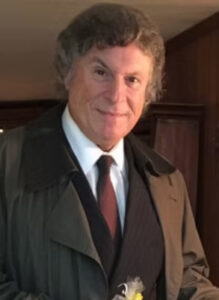
Jorge Ignacio Fernandez
Jorge Ignacio Fernandez: In the January, 2025 State of the Union address, President Trump, among other things, said his legacy—he wanted to be known as a world peacemaker and unifier. Well, there’s no better opportunity to really make that a reality than by doing just that: lifting the blockade, normalizing relations, taking them off the terrorist report list like you did with Venezuela. Most of the Cuban government, they want to cooperate. They say, “Come on down. We want to hear advice. Don’t tell us what to do, but we’ll decide what’s good for Cuba and do it.”
JW: Reversing the migration stream is another argument he fields.
JIF: A million Cubans have left, some say, in the last year and a half. That’s a brain drain for the future of Cuba, but I have spoken to many of these Cubans that have come back in the last year and a half, and they’ve said, “Jorge, if things get normalized in Cuba, we’re going back.”
JW: Fernandez believes Florida has a big stake in “normalizing” Cuba.
JIF: Florida stands to gain tremendously once the door is open. Trade—and the people of Florida very much love the people of Cuba.
JW: At this point, the sky seems to be the limit for efforts to connect Southwest Florida with Cuba. And even that could be overcome. Lopez connected with a retired airline pilot living in the area who is offering to fly goods to Cuba, for free, in a private plane.
Fernandez is trying to get clearance for that on both sides of the Florida Straits, and he is excited about the prospect.
JIF: That means we could have weekly shipments of up to 1,200 pounds of medicine to Cuba.
JW: For WSLR News, Johannes Werner.
To find out more about how you can help, go to christforcuba.com or hopeforcuba.net. You can also email to Manny Lopez: islandbreezes51@hotmail.com, and please put the word “Cuba” in the subject line.
WSLR News aims to keep the local community informed with our 1/2 hour local news show, quarterly newspaper and social media feeds. The local news broadcast airs on Tuesdays and Thursdays at 6pm.
 It's drive week!
Your gift keeps 96.5 on the air. Be one of the people who make it happen.
Donate Now