Recycling of organics helps slow landfill growth.
By Gretchen Cochran
Original Air Date: March 11, 2026
Host: Lee County, just south of here, is big into composting. Since 2010, that county has been operating a large-scale biosolids facility next to a landfill. Sarasota is years behind that kind of effort. But now, the City of Sarasota is beginning to move. Gretchen Cochran takes you to the world of worms, food scraps and topsoil.
Gretchen Cochran: When Alia Garrett finally gets to bring new composting language to the Sarasota City Commission, it could be the beginning of something much bigger. Her presentation is scheduled for March 23 but has already been postponed twice due to more pressing city business.
Garrett is with the planning department, serving as its sustainability and resilience coordinator. Hers will be a small ask—just to enter composting language into the city’s zoning and building codes.
It’s no surprise that Garrett is herself a composter.
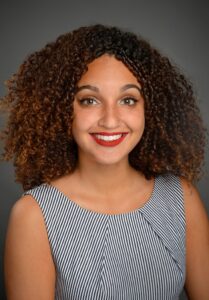
Alia Garrett. Photo via blogs.ifas.ufl.edu
Alia Garrett: In my place, I have a little bin on my counter. It’s probably a gallon or so. When I’m cooking I put all my food scraps in there. I vermicompost, which some people think is odd, but I love it. It’s composting with worms, so I have a worm bin on my back porch, and I love them. They don’t do meat or dairy. Most composting facilities that are smaller scale don’t do meat or dairy. If there’s industrial composting, of course, they can take that. But say I’m cutting a bell pepper. I put the scraps into my little bin, and then when I’m done cooking, I bring my little bin outside and put it in my worm bin, and they eat it, turn it into soil, and then I put it on all my plants and give it away
GC: If the commission concurs, proposals would be drafted, shopped around neighborhood groups for feedback before returning to the commission for marching orders.
AG: Right now, we’re not proposing the city start its own composting services. We’re proposing small-scale composting that would be managed by a third-party operator. We want to start small. That’s what we’re proposing so far. It may expand in the future. Based on the direction we receive, that might change. But what I’m looking at is a really small-scale operation to see the interest for residents. We’re not going to be mandating composting for everybody in the city and all residents. It would be something that residents who are interested can sign into.
GC: Sunshine Community Compost is a small non-profit already operating within the city. Changing the codes would allow Sunshine to expand.
It is currently undergoing organizational changes but did respond via email:
 “Regulatory uncertainty limits community benefit. Without clear definition or a municipal framework, community organizations like Sunshine Compost cannot scale food-scrap diversion or meet the growing demand for local composting and food-waste solutions.”
Randall Penn looks at it from a broader perspective. He’s a faculty waste reduction agent with the University of Florida IFAS Extension office. He’s aware that our landfills are getting full. Those are the mountains of trash we see from afar, one in Sarasota and one in Manatee Counties.
Randall Penn: We started digging into these rules, laws, ordinances as cities are starting to get more interested in this. The real benefit is, about 25% of what we throw away in that solid waste stream that goes to the landfill is organic. A large portion of that,14 or 15% of it is food waste. That’s taking up about a quarter of the landfill space all the time, and we need to conserve that space through recycling and pulling it out so we don’t have to build a new one. They’re expensive. We’re developing at a large rate here in Sarasota County, and it’s just going to get more and more expensive to transport. Cities are starting to really take seriously—what are some solutions? What are some options out there?
GC: The large food waste processor in our area is Atlas Organics in Manatee County, but with a Sarasota address. Within its 70-some acres are various processing plants including one operation for food waste. Tod Wood has managed the place for 10 years.
Tod Wood: It all goes back to the earth. Florida doesn’t have any topsoil left, so compost is your next best thing. The topsoil we do have has so much sand in it, there’s not hardly any nutrients. When you do compost with your food waste, green waste—blend it all, it will release nutrients and break down in your soil and make topsoil.
GC: So, you see, composting is a big subject. Alia Garrett is just putting the city’s toe in the water, so to speak, by opening the door a crack for the city to begin exploring it.
Gretchen Cochran, reporting for WSLR News.
WSLR News aims to keep the local community informed with our 1/2 hour local news show, quarterly newspaper and social media feeds. The local news broadcast airs on Wednesdays and Fridays at 6pm.