Tax cuts could affect the city’s commitment to fund a new performing arts center.
By Noah Bookstein
Original Air Date: Nov. 10, 2026
Host: With the November 3 election behind us, the City of Sarasota is looking to understand how Amendment 3 affects them and their prior commitments, including to partially fund a new performing arts center. Noah Bookstein reports.
Noah Bookstein: The proposed new performing arts center would replace the aging Van Wezel Performing Arts Hall on the Sarasota Bay. The city agreed to cover half the cost, with the Sarasota Performing Arts Foundation raising private money for the rest. The plan has been scaled back to a 2,200-seat hall estimated at $260 to $295 million, not including parking.
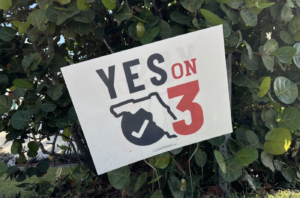 Progress has stalled. Last month, the foundation launched a formal dispute with the city over proposed changes it says would take away its control of the center. City officials say the changes protect taxpayer money. The foundation says it has raised $50 million and is weighing building the center on its own, possibly in another location.
The city’s share is supposed to come largely from a tax increment financing district, or TIF. A TIF sets a baseline for property values in an area, and as values rise, the extra tax revenue from that growth goes to projects in the district. Amendment 3’s larger homestead exemption means less of that growth gets taxed. Mayor Kathy Kelley Ohlrich explains.
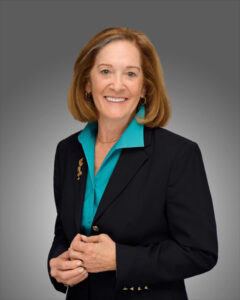
Kathy Kelley Ohlrich
Kathy Kelley Ohlrich: It will affect the tax increment financing district because their revenue is based on the increase in property values within the TIF boundaries. If their property increases in value, but we’re not getting any property taxes from it, it will impact the budget—the revenue—of the district. How it will affect the city’s participation in developing a new performing arts center really remains to be seen, just like everything else.
NB: Commissioners say they do not yet know how big that hit will be, but some still want to see the project through. Here’s Commissioner Liz Alpert.

Liz Alpert
Liz Alpert: I’ve been a big advocate for doing this. I think the city needs this. We’ve got a performing arts center that is not prepared to take us into the next 50 to 75 years, so if we want to maintain our place as the cultural center of the West Coast, then we absolutely have to do this. We have to make sure that we make it work.
NB: Commissioner Kyle Battie told WSLR on the phone that the city plans to stay the course.
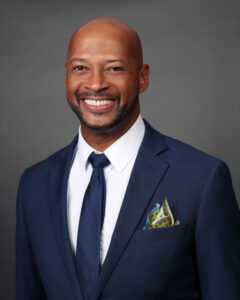
Kyle Battie
Kyle Battie: In terms of how that’s going to affect our relationship going forward with the SPAC and trying to get this performing arts center done, we look at pretty much staying on course with that, as best we can to get that done. We haven’t, to my knowledge, had any sort of mind change on it.
NB: Kelley Ohlrich is striking a pragmatic tone.
KKO: The situation is fundamentally changed, but I’m still hoping there’s a way for a new performing arts center. As we think about that and make that determination, we have to be fiscally responsible. Essential services have to come before wants.
NB: Commissioner Jen Ahearn-Koch was not available to discuss the arts center in time for this story. During her reelection campaign, she told WSLR and Suncoast Searchlight the city could not spend more than $88 million on it. Speaking more broadly with WSLR last week about the budget choices ahead, she said those decisions will fall to the commission.

Jen Ahearn-Koch | Photos courtesy City of Sarasota
Jen Ahearn-Koch: This is going to be a commission decision. We’re going to have to weigh needs versus wants.
NB: As for the amendment itself, commissioners were frank. Ohlrich said the city is already rethinking how it operates.
KKO: We were, of course, disappointed that Amendment 3 passed, but it did pass, and now the city is beginning to look into new ways of providing essential services to our residents. That’s not an easy task.
NB: Battie said he did not see it coming.
KB: I was shocked, to be honest with you. Totally surprised. I thought that a 60% threshold was a lofty expectation.
NB: Alpert noted the amendment would have failed in the city.
LA: 49.45% of the city’s residents voted for Amendment 3. In the city of Sarasota, it would not have passed.
NB: She said Sarasota, with its higher property values and fewer homesteaded properties, may fare better than cities that will be left with virtually no property tax revenue.

Outline of the latest SPAC design. | Courtesy SPAF
LA: We’re a little more fortunate here in the city of Sarasota in that only about 30% or 40% of the city is homestead, and we, of course, have properties that are higher value.
NB: Ohlrich says the city’s estimated $5.6 million general fund loss could jeopardize the services residents see every day.
KKO: Police services, all the safety services, things like garbage pickup, things like parks and recreation, maintaining our parks, maintaining our city, the streetlights—everything that the people see when they walk around our city—most of that comes out of our general fund budget, which is going to take the hit.
NB: Ahearn-Koch told WSLR last week that the amendment does not protect those services.
JAK: A lot of folks are under the impression that we’re not allowed to cut public safety, and that’s not true. It’s not called out. Public safety is not at all called out as protected.

Slide from a Sarasota Performing Arts Foundation presentation.
NB: Because Florida has no state income tax, cities and counties rely heavily on property taxes, and it is unclear how they will make up the difference. Outgoing Governor Ron DeSantis is calling a special session to set the rules for implementing the amendment. At a press conference, he poured cold water on the idea that cities could make up the difference with other fees or taxes, suggesting instead they rely on state grants.
KKO: The governor is convening one or two special sessions for the legislature to design the rules of implementation. That’s common when laws are passed or constitutional amendments are passed. You then have to move forward and create the rules of implementation.
NB: Ahearn-Koch worries the change will leave the city more dependent on Tallahassee.
JAK: That ability to govern ourselves—to be responsive to our residents that we see at the grocery stores and the gas stations and Ace Hardware and to tell them, “We are trying to respond to you very specifically and to the needs of our community”—that gets diminished the further you have to go away and ask permission to do the things that you have to do.
NB: Commissioner Flo Entler declined to comment, saying she is still getting oriented in her new role.
Reporting for WSLR News, Noah Bookstein.
WSLR News aims to keep the local community informed with our 1/2 hour local news show, quarterly newspaper and social media feeds. The local news broadcast airs on Tuesdays and Thursdays at 6pm.
 It's drive week!
Your gift keeps 96.5 on the air. Be one of the people who make it happen.
Donate Now