In this solidly Republican city, concerns center on water and energy use, noise — and surveillance technology.
By Noah Bookstein
Original Air Date: September 8 2026
Host: Hundreds of people opposing data centers showed up at a city commission meeting last week in North Port—probably the politically most conservative area of conservative Sarasota County. WSLR News reporter Noah Bookstein listened closely to the public commenters.
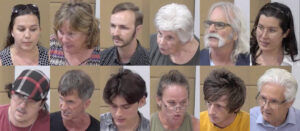
Collage of public commenters at the North Port City Commission meeting
Dominic Faircloth: My name is Dominic Faircloth, but you might as well call me John Connor because I’ve seen what the government is trying to do to us, and I’ve seen what these data centers are really about. I’m here to make something absolutely clear: we do not want a massive 50-megawatt, 1 million-square-foot industrial military surveillance data center in our backyard, and we will not let it happen. Period.
Noah Bookstein: Faircloth stood before the North Port City Commission last week and invoked a Terminator character who led humanity’s resistance against an evil AI overlord to argue the city should take steps to block a data center from being built in his neighborhood.
North Port City Commission does not usually draw a crowd to its meetings. The city is one of the most reliably Republican cities in one of Florida’s reddest counties. A rapidly growing bedroom community, it recently crossed the 100,000 population mark, making it the largest city in Sarasota County by population and nearly double the size of the city of Sarasota.
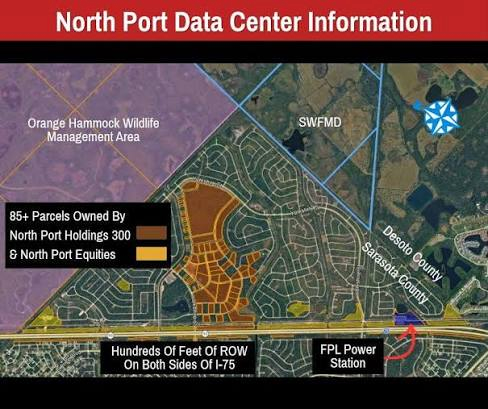 Last Monday, more than 400 people packed the chambers to fight an almost 900,000 square foot data center campus already working its way through city review. It is part of a larger tech wave rolling across Southwest Florida, sparking similar moratoriums and intense pushback in neighboring DeSoto and Charlotte counties. At the meeting, the North Port City Attorney warned commissioners that blocking that specific project outright could expose the city to costly lawsuits.
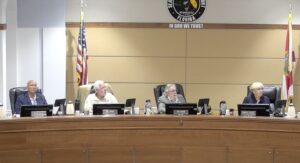
Ultimately, the commission passed an 18-month moratorium with a 4-1 vote that included a carve-out for the application already in process. The city will also spend the next year and a half writing tougher rules on water, power and noise the developer would have to adhere to before final approval. Over 180 comments and voicemails came in. A lot of them apparently read from the same script.
Caller: I am calling to say a firm “no” to the data centers in our community, as these facilities drain millions of gallons of local water, strain our power grid, run noisily, not only polluting generators that are harming our air quality but our overall health. I do not want to see our environment sacrificed for the life of corporate profit.
NB: Most of the comments were basically practical opposition to data centers from local people concerned about how these facilities use high amounts of water and energy, as well as harm wildlife, with commenters noting skyrocketing demand for data centers is driven by AI and surveillance technologies.
Another commenter, Gigi Lookoff, a homeschooling mother of four, says she lives on a strict budget, which forces her to dry her clothes outside. She delivered what sounded like a libertarian message of fiscal responsibility before asking the government to step in and stop the data center development to protect the environment and lower electric bills.
Gigi Lookoff: I heard some talk from people about the financial impact and how this is going to bring money to the city. I have an idea: Cut the bloat. Cut the junk right now, stop the spending. We’ve got to live on a budget. I live on a budget. You know what we do? My kids can attest to this. We all hang up clothes on a clothesline.
Stop the out-of-control spending. Don’t say, “Hey, we’re going to sign up and have a data center. We’re going to fill our coffers with all of this money.” And then what? You’re going to spend through that. When the money’s there, you’re going to blow it. Don’t sacrifice the things that make this area beautiful to throw some money in your pockets. Make the right choice. Don’t kick the can down the road. Say no. Stop this. You can do it.
 NB: Lookoff’s kids spoke after her, citing facts from their research about how data centers harm people, the environment and wildlife. North Port resident Lori Lynch framed environmental protection as a biblical duty before championing the federal environmental regulations conservatives often criticize.
Lori Lynch: I’m taking a different stance on this. I think this is a Biblical issue. I’m a born-again believer. I believe in Jesus Christ, and we are killing His creation. Genesis 1:1 says, “In the beginning, God created the heaven and the earth,” and now we’re destroying it. This will destroy our air. We need clean water. We’ve already established that. We need farms. We need food. We don’t need extra surveillance. We don’t need flock cameras that are going to be tracing our every move. We are Americans, and we need freedom. The freedom stands here from our data centers. We have scrub jays that are under an Environmental Protection Act. There are seven different species of bees that have already been on our extinction list. If we don’t have bees, we don’t have food. If we don’t have food, who’s going to be controlling us?
NB: And Garin Tuiyev, who was born in the Soviet Union, celebrated big business but marked the data center as something the government should regulate.
Garin Tuiyev: I was born in a country that no longer exists. It’s called the USSR, Union of Soviet Socialist Republics. In that country, citizens in general did not have a say in what goes on. When that country fell apart, it became democratic country of Russia or Russian Federation. People still did not have a chance to say. Big business, mafia and government ran everything that happened in that country. This is what makes United States different. This is why my parents brought me here. This is why I have children here. This is why I stayed here. I believe the people are what makes a community, not big business. Big business is essential because without it, we won’t have goods, we won’t have commerce, but we do have to consider the long-term effects of the decision that we make today—not just for us but for our children and grandchildren and future generations.
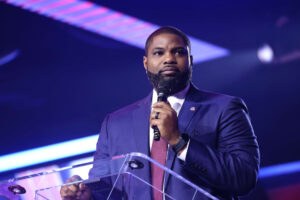
U.S. Congressman Byron Donalds speaking with attendees at the 2025 AmericaFest at the Phoenix Convention Center in Phoenix, Arizona | Photo: by Gage Skidmore, CC BY-SA 4.0, via Wikimedia Commons by way of Suncoast Searchlight
NB: This summer, in the Republican primary for governor, James Fishback ran against front-runner Byron Donalds—partly on a promise to ban data centers outright. He lost, earning about 10% of the vote against Donald’s landslide win. But 10% of his statewide Republican primary electorate willing to die on a data center hill is still significant if the margin is close in November.
Whether the broad opposition to data centers is a coalition of convenience or a preview of something larger driving engagement in local politics is a question North Port leaves us with.
Reporting for WSLR News, Noah Bookstein.
WSLR News aims to keep the local community informed with our 1/2 hour local news show, quarterly newspaper and social media feeds. The local news broadcast airs on Tuesdays and Thursdays at 6pm.
 It's drive week!
Your gift keeps 96.5 on the air. Be one of the people who make it happen.
Donate Now
It's drive week!
Your gift keeps 96.5 on the air. Be one of the people who make it happen.
Donate Now