Welcome to Rap Sessions, a new podcast produced by Ed James III and Jackson Rothman, in cooperation with WSLR!
In this episode, Ed and Jack talk to Desmond Meade about his run for Florida governor. Check out the abbreviated transcript of the episode. To listen to the full show, click on the player below.
Ed James III: Welcome back to Wrap Sessions, a new podcast produced alongside WSLR focused on Florida politics and culture. On today’s show, we are joined in the studio by Desmond Meade, the voting rights activist who led the initiative to amend the Florida Constitution in 2018, restoring voting rights for over a million Floridians.
His next challenge: Running for governor as an independent.
But first, let’s chop it up.
What’s up? What’s up, everybody? This is Ed James III. I’m here with my man, my main man. Main man. Jack Rothman. How you doing, sir?
Jackson Rothman: Oh, man. I’m great, man. We’re here for another episode of Rap Sessions. We have an amazing guest that is joining us today – Desmond Meade, a candidate for Florida governor, running as an independent.
EJ: I know we’re gonna have a great show. Desmond is an interesting guy, for sure. MacArthur Genius Grant Award winner, Nobel Prize nominee for his work, restoring voting rights to over 1.4 million people in the state of Florida. Been all over the news, from talk shows to TMZ, to CBS, 60 Minutes.
JR: He is an interesting guy, absolutely, and we were glad to be able to talk with him a little bit about his campaign for governor.
EJ: But first, man, let’s go ahead and chop it up, bro. There’s a lot going on in the music industry. Obviously, we are now living in the age of AI, and it seems that AI has reared its ugly head. Some would say ugly head, but AI is now relevant in the hip-hop space. For any of you all who’ve heard that song by Phoenix flexing “Rubbers,” there’s been a viral controversy surrounding AI. In that song in particular, how much of that is real, of that is his voice versus AI?
And the reason we’re having that conversation is because his new viral hit is drastically different from the work that he’s done in the past. And, I’ve watched a few interviews of him where the host will ask him to sing that song, and it just… in some of them, he’s literally getting the lyrics wrong. Jack, what do you think about this?
JR: I don’t know. Fortunately, I have not been privy to this controversy before you brought it up to me, and all I will say is I am not a fan of AI-generated music or AI-generated art in general. There are use cases for it, obviously, but for the most part, I think there are some people who use it to just replace their talent or replace skill, and use it to try and be something they’re not.
EJ: And that is the opposite of what art is supposed to be, right? It’s supposed to be about telling who you are, telling the truth, about your … whether it’s your environment, your personal life, your history, how you feel, giving a unique perspective on the world, and that is something that no software can give you.
Speaking of that, Tyga is also now Rack City. Mr. Rack City himself has shifted gears and now has taken on a whole different persona. People are saying he’s using AI too. His alter ego is a musician named Starface, and he’s making ’80s-themed music similar to the Phoenix flexing song, that also was ’80s themed.
JR: Doesn’t that sound a little bit like The Weeknd, Weeknd’s “Starboy”? And he does a lot of the ’80s. I had this theory for a long time that, this was after Michael Jackson died, that they were giving all of his demos to The Weeknd and Bruno Mars. And they were repurposing them. I don’t know if that’s true, but a lot of them, in my head I could see it. I would say that Bruno Mars clearly gets a lot of his influence from artists in the past, Michael Jackson, Prince, and James Brown. So I could see where you’re going with that.
EJ: And then, The Weeknd’s lyrics oftentimes are very Michael Jackson-esque. So I can see that, bro, for sure.
JR: Ed, who’s your alter ego?
EJ: My alter ego. Man, my alter ego is Big Daddy Ed. Big Daddy. I was thinking about for the podcast, maybe we could be Go Ahead Ed and Tomcat Jack.
JR: Okay. Go Ahead Ed, I like that. I like that. And Tom, what? Tomcat Jack?
EJ: I said Tomcat Jack.
JR: I’m the Tom- Okay. For sure … I’m the coolest cat on the block. The coolest cat on the block. Cooler than the other side of the pillow. You know it, baby. Ooh.
EJ: So Jack, let’s switch it up and talk about sports right now. So let’s talk about football.
Recently Cam Newton came under a little bit of controversy, because he decided to talk about Deion Sanders, Coach Prime’s record as a head coach. Which I believe currently stands at 16 and 21 or something like that. He has a losing record, in his career, and his best season was, that second season with Shedeur, his son, at quarterback, and obviously Travis Hunter, when they were at Colorado, and it seems like a lot of people have been dancing around that and been nervous to admit that simply because Deion, Coach Prime, is arguably one of the best, if not the best, to ever play in the NFL. But, just because you were a great player doesn’t necessarily make you a great coach. And I think we saw that, Deion coached his son Shedeur from Pop Warner all the way through college, and we saw after Shedeur left there was a significant drop-off. What are your thoughts, Jack?
JR: You know, I think the bigger issue is not necessarily Deion as a coach. I think he’s a fine college coach. It’s NIL taking away recruiting power from so many schools. It’s just how it is. Everybody in college is a mercenary now, and you’re gonna go to not… It used to be either going to the biggest market to have the biggest launchpad to get on national TV and have scouts see your games or in the best program where you’re gonna win and you’re gonna develop. But now with the money, guys are bouncing around at different schools at every position, and it makes it hard to build a cohesive program, especially for a younger coach like Deion. And I say younger, he’s only been a head coach, he’s under a decade. He had his couple years at Jackson State, where they were successful. They turned that program around and they came up to Colorado, and they have made Colorado a very notable program, but not a championship contender. I think that expectation is maybe a little hyperbolic to expect Deion within five years to make a D1 school that has never been in the championship this millennium- into a contender. It takes time. You need to build a booster network, which requires people to graduate and become rich. Or move to the area, and you have to recruit high-level players and it’s-
EJ: But you talk about NIL though, Jack. Look, at the end of the day, there are very few people that are better recruiters than Deion Sanders. So it’s not as if he’s not a good recruiter. But again, does the Colorado program have the money to pay these kids top dollar? I don’t know. And Deion’s perspective on NIL is, he’s not very much a fan of NIL, and that’ll chase people off. He’s also a tough coach.
JR: He has high expectations. He’s a Hall of Fame football player. Like you said, one of the best ever. He’s gonna coach you differently than somebody who’s maybe, they might be more successful, but they’ve never hit the field. Or they’ve never hit the level that Deion has hit. There’s a give and take, and I think somebody like Deion is going to appeal to guys like Travis Hunter, who are going to look for the best possible person to develop them in their position.
EJ: And I think that is the biggest selling point of Deion versus being an offensive coordinator, even though, again, he’s playing football and baseball at the same time. The guy can do anything. I think more traditional programs are going to just still have a little bit more of a hook because they can develop different skill sets, different players at different positions, more so than Deion has so far.
Look, Jack, we have an exciting episode coming up with Desmond Meade, candidate for Florida governor, running as an NPA, No Party Affiliation. So stay tuned, y’all. We have a great conversation with Desmond Meade coming up.
WSLR News brings you grassroots reporting about Southwest Florida from the heart of the Sun Coast, expanding access to independent community-driven journalism through radio news broadcast and podcast digital distribution with in-depth coverage of local news, politics, and activism. WSLR News airs every Wednesday and Friday at 6:00 PM Eastern Standard Time.
Listen on WSLR LP 96.5 FM in Sarasota, 100.1 FM in Bradenton, and anywhere in the world at wslr.org. Membership dues provide a critical portion of WSLR and Fogartyville’s annual operating budget. In return, they enjoy giving you the best possible experience of community through live local programming on WSLR and diverse cultural and educational events at Fogartyville.
Member perks include discounts on tickets, notification of upcoming events, and more. To learn more about how to become a member, visit wslr.org/membership. Now, back to the show.
Desmond Meade is a voting rights activist and the former executive director of the Florida Rights Restoration Coalition. A Florida native, Meade battled drug addiction and depression to become a globally recognized force for change in our state. In 2018, Meade led the successful effort to pass Amendment 4, a state ballot initiative that restored voting rights to over 1.4 million Floridians with previous felony convictions.
In 2019, Time Magazine named Meade as one of the 100 most influential people in the world, and in 2021, he was awarded a MacArthur Genius Grant. Under Meade’s leadership, in 2023, the Florida Rights Restoration Coalition was nominated for a Nobel Peace Prize. Meade is now up for his next challenge, running for the upcoming vacant governor’s office as Ron DeSantis’ term ends.
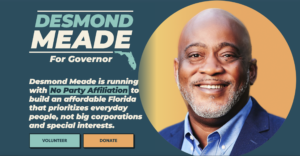
Meade is an independent, running as an NPA or no party affiliation candidate. At a time where politics is more polarized than ever, Meade told us he believes he can bridge the gap between voters and unite Floridians over common sense issues backed by his record of activism in the state.
We have, the man, the myth, the legend, Desmond Meade. someone who has been in the trenches fighting the good fight for decades now. And, we’re so glad and, blessed to have him on our show. Desmond, thank you so much for joining us.
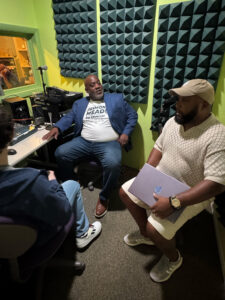 Desmond Meade: Yo, thank you so much for having me this morning.
EJ: So I wanna start things out. We’re Rap Sessions. Jack and I would consider ourselves hip-hop aficionados. Jack is a little bit younger than me, so you know, he kinda grew up on the, I would say the not the best rap, I think rap from my era-
JR: Oh, come on now.
EJ: …is a little bit better, the mumble rap era. I’m just playing with you, Jack. But, so we all often talk about what we’re listening to, who’s on our playlist. Yeah. Desmond, who are you listening to these days, man?
DM: Wow, that’s a great question. and then thinking about the different eras.
I have … So it’s hard for me to really talk about, especially the old era, because it’s just so many good people in the old era, right? But when I do go back old school, I like LL. I can deal with KRS-One. He could be on my playlist. Also, I would say, Eric B. Rakim. Paid in Full. Changed the game. The new rap, it’s a limited market there, right? ‘Cause there’s a whole bunch of mumbling that I can’t keep up with or understand. But for the new wave, I really, I can rock with some Kendrick Lamar, maybe a little J. Cole. That’s on my playlist. And then if I get a little rowdy, I go back to maybe some little 2 Live Crew or some Banned in the USA … Planet Rock, EJ: And that’s– It’s interesting you mentioned 2 Live Crew because you got Luther Campbell, AKA Uncle Luke, who’s running for US Congress now. What do you think about that?
DM: Listen, I think that the best democracy is a democracy where anyone can believe that they have an opportunity to serve, right? And then have a fair opportunity to actually get their message out and have people vote their conscience.
EJ: And so, speaking about that, that opportunity to serve, you have served the people of Florida and really this nation for many years, even before you decided to throw your hat in the ring to run for office. So for those who don’t know who Desmond Meade is, give us a little background on who you are, your backstory, and maybe how that brought you here today.
DM: Cool, man. Listen, let me just start from 2005. August of that year, I found myself standing in front of railroad tracks, waiting on a train to come, so I can jump in front of it. At that moment, I was homeless. I was recently released from prison. I was unemployed. I was addicted to drugs, and I didn’t see any light at the end of the tunnel, and I was ready to end my life.
I was raised in a good family. I was raised in a Christian home. But there I was that day. I was not supposed to be there, but I was there. And I waited for quite some time for that train, but that train never came. And I like to believe, and I do believe that God held that train up, because He had other plans for me. And I ended up crossing those tracks, and two blocks further was a place called Central Intake Facility that helped me get checked into a drug treatment program, and I went into a four-month rehabilitation program. And after completing that, I moved into a homeless shelter again. And while living at the homeless shelter, I decided to go to school to do something different, to prevent a relapse or to prevent using drugs again. And I enrolled at the local community college, ended up graduating at the top of my class in paralegal studies. My professors encouraged me to continue my education, so I pursued another associate’s and a bachelor’s, and eventually, got accepted into law school. And I attended Florida International University College of Law, where in May of 2014, I graduated with a law degree.
But between, in between the time that I started at the local college and ended up graduating from law school, I ended up just dedicating my life to giving back to the community, dedicate my life to being an advocate, and eventually I started an organization called Florida Rights Restoration Coalition, or FRRC. And that organization was the vehicle that I used to follow a vision that God gave me to amend the state constitution to allow people with felony convictions who have served their time to be able to be a part of our democracy again, to be able to vote. And in 2018, we led a ballot initiative that actually changed the Florida Constitution and cleared the way for over 1.4 million returning citizens in the state to be able to vote again because of that effort. I’ve been recognized across the state and across the country. I was named Central Floridian of the Year. I was named Floridian of the Year. Time Magazine named me one of the 100 most influential people in the world. A couple years later, the MacArthur Foundation awarded me a Genius Fellowship. They say I was a genius. I kinda knew it all the time, but now I have proof. And then, in 2023, the crème de la crème, my organization was nominated for Nobel Peace Prize by the same organization who nominated Dr. Martin Luther King.
EJ: You mentioned amending the Florida Constitution, and for those out there who don’t know how big of a feat that is, how tall of a task that is, can you talk about what goes into getting an initiative on the ballot?
DM: Oh, wow. Man, we have a recent example. I think just a year or two ago, there were some folks that was trying to lead a ballot initiative to allow for the recreational use of marijuana. They spent over $150 million trying to get it on the ballot and get it passed, and they weren’t able to do so. Florida is the toughest state to pass a ballot initiative. You have to collect tons and tons of signatures from people throughout the state and every part of the state, and there are tough rules that our Florida Legislature created to make it even harder for folks to do it. Verification, all kinds of roadblocks. And then if you’re lucky enough to collect enough petitions to get it on the ballot, now you have to convince the super majority of voters. I think every other state, you just need the majority, so 50 plus one. In the state of Florida, you need a super majority, and they’re trying to make it even harder for citizens’ initiatives to pass. It’s an enormous task, but we were actually able to do it because we were an organization, and the effort that was based around grassroots involvement. We were an organic grassroots movement that I like to tell people welcomed and enjoyed bipartisan support.
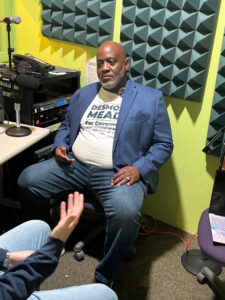
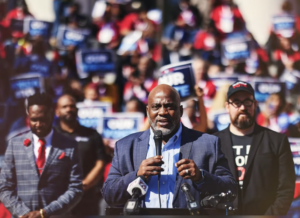
Desmond Meade
EJ: Walk us through the steps. You have to collect signatures from across the state, so you’re traveling around raising awareness and support. Before even then, you have to get the language cleared, right?
DM: So the state has to approve whatever language you use. And then once they do that, they would actually approve the form that you use, and then you have to take that particular form and replicate that form and go around the state, and you have to collect a minimum amount of petitions. The first stage is just to trigger what they call a Supreme Court review, which means that when you’ve collected a 10th of the petitions that you really need, that would trigger the Florida Supreme Court evaluating your petitions and seeing whether or not it’s constitutional, or whether or not somebody has some issues with it. And then they also trigger what they call a fiscal impact conference, because any constitutional amendment also has to have with it a financial impact statement. So when you’re voting on an amendment, there’s something that’s gonna say, “Listen, if this amendment passes, it may cost Florida taxpayers so much amount of money,” or maybe, “It don’t cost Florida taxpayers anything,” or, “We can’t determine what the exact cost is gonna be.” Right? But that statement has to accompany whatever constitutional amendment that is placed on the ballot, so the voters will be as informed as possible. And so that happens when you trigger the Supreme Court review, when you get at least 10% of your signatures. And so we had to do that. And when we did, we went before the Supreme Court, no one challenged us, which was a rarity. And we end up clearing the Supreme Court, and then you had to collect the other 90% of signatures within a small period of time. And so you had to have a massive operation throughout the entire state, tons of volunteers, just putting forth a lot of effort into that.
EJ: So I’m sure you’re familiar with Michelle Alexander’s book, “The New Jim Crow”. And in that book – Michelle Alexander is a law professor – her thesis is that the sudden and dramatic mass incarceration of African American men, primarily through the war on drugs, has created a new racial undercast, so a group of people defined largely by race that is subject to legalized discrimination, scorn, and social exclusion. Can you talk a little bit about that thesis, and did you see that play out, in, in reality?
DM: … Yeah, and I think it’s a little bit more expansive than what she said, right? Because what is missing in that blurb that you just read is the fact that women are the fastest growing demographics of folks that are getting incarcerated. The women populations in prisons have multiplied over 800%. And so it’s not just men who are getting caught up in a prison industrial complex system, but it’s also women, mothers. There’s an entire market. We’re seeing the depletion of families and the family structure because of this, war on drugs, and of course other dynamics that play a role in weakening the family, particularly minority families.
EJ: Let’s talk a little bit about the political implications of this, right? So obviously anytime anyone invests in killing an initiative, or passing an initiative, that means that there’s something valuable that’s at play, right? And so when we talk about the restoration of rights for 1.4 million people, in this great state, talk a little bit about what that means and how that can pot- potentially shift the political tide.
DM: Yeah, that was definitely heavy on the rotation of discussions, when we were in the middle of our initiative. And some of those assumptions were justified, but some were not, right? Because when we talked about the restoration of rights for people with felony convictions, the automatic assumption is that we’re talking about the African American community, right?
Because there’ve always been a lot of discussion about the disproportionate impact that the criminal justice system has had on the African American community. African American men are more likely to get pulled over or get arrested. Even though we know that every race is abusing drugs at the same rate, African American men are many times more likely to get incarcerated because of a drug addiction, right? And so all of those discussion points would lead somebody to believe that when we’re talking about restoring the rights of people with felony convictions, they automatically think, “Oh, African Americans,” right? And when they think, “Oh, African Americans,” they think, “Oh, gonna be Democrats,” right? And so there is an inherent response to not necessarily be in favor of those things because of the political implications that’s associated with it. So if a bunch of Democrats get their right to vote back, then maybe Republicans won’t be in control, or Republicans won’t have a foothold. And all of those were falsehoods. All of those was based on inaccurate assumptions of the people that we were actually working for. At the end of the day, Jack, you’re more likely to have lost your rights than Ed. At the end of the day, African Americans only represented a third of the people in the state of Florida who could not vote because of a felony conviction. So I’m more likely restoring your rights than Ed’s rights.
JR: It reminds me of the statistics about how the affirmative action programs, the largest beneficiary of them historically was white women. But it was never really seen that way by the general public. It was always framed as this beneficiary, “Oh, this is Black people”.
 DM: “Oh, these are- yeah … mooching off social programs.” That messaging is horrible, it’s divisive, and more and more people need to start recognizing that the messaging is not designed to help them. The message is designed to fool them, to put the wool over their eyes, and allow them to get taken advantage of, by the powers that be. ‘Cause I’m giving a good example, even where you see the efforts around DEI, what a lot of people don’t understand is that DEI, what’s in there is provisions that help people who are handicapped. What’s in there are provisions that help veterans that are coming back from serving our country. But they frame it as, “Oh, this is just another form of affirmative action,” when it wasn’t. It was something much broader, much deeper, and it helped a much wider array of people. It wasn’t just helping African Americans and minorities. No, it was helping everybody. That’s one of the reasons why I’m really trying to speak out, because, see, politicians, they benefit from dividing communities and pitting neighbor against neighbor. ‘Cause at the end of the day, they’re, like, both parties are really failing everybody. That, and I tell folks that, “You know what? Rather than having a war on woke, they need to be having a war on broke.” I don’t care whether you’re Republican, Democrat, or Independent, there are people that are suffering, because they can’t afford to make ends meet. There are people who are working harder than ever today, but yet falling further and further behind. That have nothing to do with DEI right now. That have something to do with corrupt politicians, not wanting to do their job and trying to distract us by having us fight against each other, and not recognize that we need to fire them and get them out the way and get some real public servants in office to actually address the issues that impact us on a daily basis.
EJ: So talking about your history, when you were in the throes of drug addiction, you were considering ending your life. Where did the motivation to say, “I want to get into law, I want to get into politics,” how did that motivate you to get into this?
Desmond Meade: That’s a complex story. There are so many different points there, insertion points. A couple of things. First of all, when I was at those railroad tracks, I didn’t think I had any value. And society told me that. I lived in a state actually that told me that they didn’t see me, they didn’t care about me, and if anything, if they can get rid of me, they would love to do so for the rest of my life. But I crossed those tracks, the train never came. And when I did, I asked myself a pivotal question, and it was: If I were to have died that day, how many people would come to my funeral? And that question caused me to start thinking about what have I done on this earth with the time that I’ve spent here? How have I made my life valuable? How have I made a difference? Fortunately, I was able to dwell on that for quite some time, and I realized that the best way to deal with negative things that happen in your life is actually to take those negative things and turn it into something positive. Lauryn Hill talks about that. Taking the negative and turn it into a positive. And you do that by using the things that used to weigh you down, and you use it to uplift other folks. And I figured out a way to do that. My story of being homeless and addicted to drugs and incarcerated, and being able to overcome that and getting a law degree. That was a story that inspired so many people whose family members or who themselves were struggling with substance abuse, and feeling like they didn’t have anywhere else to go. But being able to see or hear from somebody who was able to overcome that gave them motivation, gave them some type of promise, gave them hope, and they were able to do amazing things. 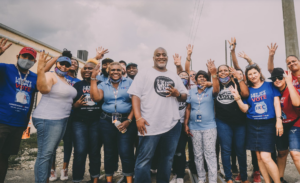
Because listen, America is a nation of second chances. America is a country, man, that people who are down will bounce back and be triumphant. We’re also a nation that – you know what? – what gets our blood going more than anything else is not fighting against each other, but actually by coming to each other’s assistance. You can see that when right here after a hurricane come through. You can see communities coming together, Black, white, brown, it doesn’t matter. Nobody cares about your politics or your immigration status, none of that. All they care about, man, is another human being in need, and we’re gonna rally around that.
That’s when our blood gets pumping and flowing, and actually that’s the time when we’re great as a country. That’s how we make America great again, not through politics or politicians, but through connecting with our neighbors in a meaningful way in times of need.
EJ: That is beautiful. You talked about providing hope, providing opportunity, something to look forward to. You told this really beautiful story I’ve heard a few times about, I don’t wanna tell it for you, I’d love to hear it for our audience, about how important the right to vote is for people, especially those who it’s been denied to for so long, and that dignity and that respect and that ability to participate in our society. You told this beautiful story about a woman who worked her entire life to be able to get that right. Yeah. You worked alongside her, and she was unable…
DM: it was a lady on the East Coast, over there in the Fort Pierce area. We ran into her after we passed Amendment 4, and we was trying to register folks to vote, but I don’t think she could vote because she may have had some outstanding fines or fees. And so when we were able to take care or remove that barrier, we were– we had an organizer in her home registering her to vote. And as she was filling out the registration form, she started crying. And the organizer’s, “Why are you crying?” And what she said was, for over 20-some years, she’s been trying to get the right to vote back, and she had got to a point to where she thought she never would, ’cause she lost the right to vote because she had a drug addiction. That was it, drug addiction. And she never thought that it would happen, but there she was that day actually filling out a voter registration form. And when she finished it and she handed it over to our organizer, she asked our organizer to pray that God would allow her to live long enough to be able to vote. This was in 2020. See, what we didn’t know at the time was that her doctor had given her six months to live. It struck me that this lady had a limited time left, and her dying wish was to actually be able to vote again. It wasn’t go to Disney World, or to meet a celebrity. It was like she just wanted to feel what it felt like to be a part of something that was bigger than her. And, that story coupled with my story really formed the argument for me that voting is less political than people think it is. And I think that there’s so much things in life that politicians make political and divisive that’s not really that way. That voting, like when I went to vote, I wasn’t voting as a Republican or a Democrat or even a Black person. That I understood that the act of voting was something that transcended race, transcended political parties, it transcended biases. That the act of just voting basically just said two words: I am. It was a validation of your existence in a community. That was like you are a part of this bigger thing, and that your voice mattered. It had nothing to do about your political leanings. It had nothing to do with your religious beliefs. It had everything to do with just your humanity, that you are something of value, and that’s what voting did. Voting validated our value in our society. That was it. And everybody deserves to be valued, no matter what your political preferences are. And so now when we get so politicized with this, now we’re saying “some people shouldn’t vote,” and if they don’t vote a certain type of way, they shouldn’t, their voice don’t matter. Just stop and think about it for a minute. That does not make sense. But politicians will have you thinking that. When the reality is that even in our own homes, a husband and a wife don’t agree on everything. But that don’t mean they can’t love each other. That don’t mean that they can’t have a beautiful home. In football, we see it. Half the house is Alabama Crimson Tide, the other half is Auburn Tigers, or half is Florida State, the other half is Florida. We have those things, but that does not stop us from loving each other, right?
 But politicians will have us thinking, “Oh, because you’re a Democrat or because you’re a Republican, I can’t talk to you,” or, “I must hate you”. I do believe that people of Florida don’t wanna wake up every day hating their neighbor or living in fear of their neighbor. That’s not how God intended us to live, and that’s not how people really wanna live.
EJ: And so just offering something different. But it starts with the idea that voting is not as political as people may make it seem. The ballot initiative passed, but there was still challenges to it in court. And it looks like where we are at right now is there are still ways to prevent people from voting through the fines associated with their incarceration or their addiction. Could you tell us a little bit about how we move towards either working to pay off those fines, lifting those fines? What are the next steps with that?
DM: So let me just say this: That ballot initiative passed, and it passed because people of all walks of life came together. We had over a million Republicans, well over a million independents that actually voted for it. And we showed the world that love can in fact win the day. When people come together around some basic values, we can accomplish anything. And so we did that. Politics got in the way. That’s on nothing- like usual … but pure politics. As usual. If things is not gonna work right, you best believe politics is somewhere involved in that, and it got in the way, and it created these barriers. But they’re not insurmountable barriers. And so what we’ve done was we created pathways. There are pathways that’s created. And let me tell you, some of the pathways that was created that allow people to get the right to vote back, guess what? It was created by Republican legislators. We worked with them to actually create these pathways for people to be a part of our democracy again. And on the surface it might look divisive, but when we dig down deeper, it’s not as divisive as people are making or politicians are making it. There are some folks that wanted to do the right thing, and we were able to actually get the right thing done. The organization that I led, the Florida Rights Restoration Coalition, folks can reach out to it now. That organization has mechanisms in place to help people who still may have barriers, be able to get the right to vote back. Now let me show you something. There’s a couple of things. Number one is that even with the legislation that required the payment of outstanding fines and fees, that only impacted a little over 700,000 people. So there’s over 600,000 people who right now are eligible to register to vote, and they just don’t know it yet. And so, it’s about how are we informing those folks? But a lot of folks are confused. They’re like, “Okay, maybe I have a felony conviction.” There are some folks that think they have a felony conviction, but they don’t because it was downgraded to a misdemeanor. Or they had an adjudication withheld, which meant that it doesn’t count as a conviction, and they still have their civil rights. And so there’s a lot of those folks. But out of the 700,000 that do have it, some of them, some of the cost is as little as $200 or $100. The problem is that the state at one point couldn’t tell somebody how much they owed, so they were like, “Hey, you can’t vote until you pay your fines off.” But when somebody would say, “Okay, state, how much do I owe?” The state would say, we don’t know.
JR: Come on!
DM: Yeah, if you’re gonna set the barriers, then you got to provide a mechanism to be able to allow people to right the wrong. And there were lawsuits in place, and we actually ended up filing a lawsuit, but our lawsuit was just saying that if you can’t tell somebody that they’re not eligible, then you cannot punish them. And what I mean by that was that there were a lot of people who the state was arresting saying that they registered or they voted illegally. Now, the problem with that is that every one of those individuals that was arrested had one thing in common. You know what it was?
EJ: We can guess.
DM: Yeah. They were all issued a voter identification card by the state of Florida. So if you go to the driver license bureau and you say, “I want a license,” and they give you a license, the state can’t come two days later or two years later or five years later and say, “Oh, we gave it to you by mistake. We’re gonna lock you up.” No, we rely on the state to be able to determine our eligibility.
EJ: Yeah, the burden, the onus should be on the state. 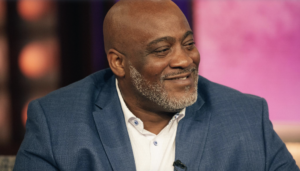
DM: The burden is on the state. We don’t have access to everything they do. So we go to the state and we’ll say, “Hey, can I drive a car?” Let me tell you what the state can do. If you go to get a driver’s license, if you have a toll infraction in Polk County, and you have a parking ticket in Dade County that you didn’t pay, and you’re here, in Sarasota trying to get your license, the license bureau will be able to say, “Hey, Jack, you can’t get your license until you pay that toll infraction in Polk County and that traffic ticket in Miami.” They’ll do that. The minute you pay it, then they’ll issue you a license. So when people are going to try to figure out, “Hey, can I register to vote?” and the state is saying, “Yes, you can,” then the state, the person believes that they rightfully can vote. But if the state had its system together, they could say, “Oh, no, you can’t because you owe $50 in Dade County and you owe $75 in Manatee County.”
EJ: If the state have a system that can tell you that for driver’s license, why can’t they have a system that can tell you that for registering to vote, especially with voting being such an important part of our democracy? Let’s talk about a political phenomenon. and I wanna kinda quickly go back to what you said about, you know- divided houses. I’m a prime example that you can flourish in a divided house because I was, my grandmother was in our house, and she was a Wildcat, Bethune-Cookman Wildcat, and my dad was a FAMU Rattler.
DM: Ooh, lord. Yeah. Yeah.
EJ: Yeah, so it can work. But this political phenomenon … in the state of Florida, there’s a history when you talk about citizen-led initiatives and ballot measures, Florida voters tend to approve progressive type of amendments, by large margins. But in the same breath, they will vote for a conservative candidate. So things like voter rights restoration, minimum wage increases, medical marijuana legalization, environmental protection and land conservation, anti-gerrymandering reforms, and even back all the way to 2002, class size limits. So how do we reconcile that difference?
DM: Here’s the thing: No one is a monolith. No group of people is a monolith. And you can have a conservative voter that have some opinions that some people may consider progressive. We’re not just cut with clean lines here.
EJ: The reason I ask is because it seems to me that, when you politicize something, as you mentioned…
DM: A lot of electoral races are politicized. There’s a D behind somebody’s name, there’s an R behind somebody’s name. But when you start talking about issues, you come to find out that people don’t tend to vote along partisan lines, because if you frame it in the right way, you find, as you mentioned, they’re not partisan issues. They’re not partisan issues. They’re common sense issues. I’ve gone, I’ve traveled around the state of Florida. I’m gonna tell you, no one has traveled the state of Florida more than me. Okay. I’m gonna tell you that right now. There was a time when I used to put at least 50,000 miles on my car each year. Whew. 50,000, okay? And I’m gonna tell you, I talk to people from all walks of life, and let me tell you, what I’ve discovered is that there’s no such thing as a Republican problem, there’s no Democrat problem that people are facing. They’re facing people problems, life problems, right? At the end of the day, let me tell you something, the price of gas in this county is just as crazy as the price of gas in Broward County, right? Or the price of groceries, in Duval is just as crazy as it is in St. John’s. People just j- across the board – are suffering because our political parties are more infatuated with political power than with solving people problems. It can’t get any plainer than that. They failed. And so, what they do with that, in order to distract us from recognizing that they have failed to do their jobs, or that they’re not prioritizing us, then they try to pit us against each other on so many other different things that is not even relevant to what we’re dealing with. We see it time and time again. When you’re able to talk to people, from all walks of life, around some common sense issues, there are more people that agree than not, and that’s why you can find where, like with the Restoration Amendment, we was able to actually pass things. ‘Cause at the end of the day, who don’t believe in second chances?
EJ: Who don’t want someone who they love to be able to have a second chance and be a part of our society?
DM: Who don’t, right? And so it’s how we frame it and who’s leading that conversation.
EJ: Speaking to those political distractions you alluded to, we all know that words have power, and something that I think you can take credit for is popularizing the term “formerly incarcerated”, or “returning citizens”, rather than “ex-con” or “criminal” or “felon”. And we see the same thing, as we talk about other issues, with instead of saying “illegal immigrants”, “undocumented”. So when we talk about the fact of words having power, talk to us a little bit about the importance of humanizing people.
DM: When you talk about returning citizens, it has a much different feel than calling somebody an ex-con or a felon. And why is that important? I think it’s very important because we know through our history that whenever you can dehumanize someone or desensitize the masses as to a person’s humanity, then you’re able to get away with a lot of atrocities against them.
That’s what Hitler did to the Jewish community. It didn’t start with just blatant attacks. It started with dehumanizing the Jewish community. and when that happens, then you could obliterate groups of people, and no one is raising the alarm because they’re not people.
The issue that I was having was that when we talk about the impact of our criminal justice system with America, we respond to a lot of things by creating more criminal laws. We criminalize so many things, and because of that, and then the war on drugs, that we really incarcerate or we arrest a much higher percentage of our population than most modern countries. Which means that one out of every three people is impacted by the criminal justice system. And so, when we use phrases to dehumanize people who’ve been impacted by the criminal justice system, we’re inadvertently dehumanizing our own family members, the people who we love. But we don’t recognize that because we think, “oh, it’s just those other people that we’re talking about”. But the reality is that you’re putting your own family member or someone that you love in that category of dehumanization, of being dehumanized. And so what we try to capture is that, “listen, we tell you, if anybody have kids, especially if they have boys, they know that boys is always gonna do something crazy. They’re gonna do something boneheaded. They’re gonna be like, you wanna grab them like, “What the heck were you thinking about?” But the thing about it is that, no matter what your son or your daughter do, they never stop being your son and daughter, right? And you never stop loving them, right? And so when people make mistakes, we shouldn’t just dehumanize them automatically for the rest of their lives and say they’ll never amount to anything. That is crazy. That is unrealistic. That’s absurd, and nobody would do that to somebody who they love, right? And so we’re trying to get people in the mindset that, listen, that person that made the mistake belong, is a family member to someone. It might not be your mother, but that’s somebody else’s mother. It may not be your brother. That’s somebody else’s brother. How would you like your brother to be treated like that? And when people start thinking like that … And it’s some biblical principles, right? Do unto others as you would have them do unto you. And so when you start thinking about, would I like to be treated like that, and have that be your guiding force of how you treat people, then that creates a better environment for everybody. And that’s what we were trying to do. To add to the language part, the term ex-con, it really, that’s no good … it’s no good. It really defines someone by their past, whereas returning citizen, it defines you by your future. Yeah. I think that’s powerful. and it keeps your humanity. But let me tell you something else, too. Somebody mentioned Florida State. Florida State have one of the top criminology doctoral programs in the world, and they actually did a study that looked at when you call somebody an ex-con or ex-felon, studies show that you actually increase the likelihood of them recidivating.
Matter of fact, everybody’s heard it. If you have a child, and that child grows up, and you keep calling that child stupid and dumb, that child is gonna grow up thinking that they’re Incompetent, stupid and dumb. And so when you call somebody negative things, then you actually help perpetuate the very same thing that you said you don’t want.
EJ: They talked about that in the book “Freakonomics”, so yeah.
DM: Oh, really?
EJ: Yeah.
DM: Okay. So no, you don’t want to use those terms, right? Because at the end of the day, what do you want? Do you want somebody who made a mistake, was punished for it, to come back home to society and make some more mistakes? Is that what we want? Because I don’t think anybody wants that. If anything, what we want is for that person to learn from their mistake and then come back home and become a contributing member of society. That benefits everyone. ‘Cause anything else other than that, we’re all gonna suffer. So I’d rather create an environment where everybody can benefit than anybody suffer. I’m gonna give a good example. Everybody’s talking about the economy, that there’s not enough money coming in and there’s too much money getting taken out of our pockets through taxes, and we’re not even getting good return on our investment. Of crooked politicians, the cause of that. But let me show you something. Do you know that in the state of Florida over the last 10 years, we’ve lost over $300 billion of earnings? I’m gonna say the number again. $300 billion of lost earnings because of crazy rules that puts restrictions on people like me from being able to get good-paying jobs. It’s crazy. $300 billion. Could you imagine that type of money being poured into our economy? Listen, if you talk about that, you want that there’s too much of a tax burden on you, then how do we lessen that burden? By creating a broader market so there are more people that’s paying their fair share of taxes. I was speaking to someone the other day, yesterday, and in a community, if there’s a community of 100 people, and only 20 of those people are paying taxes, they’re paying taxes for the whole community of 100 people. That burden is gonna be heavy. At some point, it’s gonna be, “Come on, we need help.” So what you do, when you’re in your house and the bills start getting too tight? We gotta get more people working in the house, right? So instead of only 20 people working, why not have all of the 100 people working, and let everybody pay their fair share of taxes, so you, the 10, don’t have to cover the taxes for everybody else. Doesn’t that make sense? Anybody would want that to happen. I don’t want to be the only one paying taxes for the rest of my community. I want my community to be able to pay their fair share. So that means that I am supportive of programs that allow my neighbor to get a good-paying job, ’cause when he gets a good-paying job, I don’t have to pay as much taxes, and guess what? Because he’s working and they’re able to provide for his family, he don’t have to worry about trying to rob and steal to make ends meet. You feel me? And now I’m in a safer community, I’m in a more vibrant community, economically and everything else, and everybody wins.
EJ: Talking about some of those policy ideas, we would be remiss if we didn’t mention the fact that you are running to be the next governor of the state of Florida, and you are running as an NPA. Can you talk a little bit about why, one, you decided to run for governor, and then two, why not run with one of the two major political parties?
DM: Let’s start with the last question. I’m running as a no party affiliated candidate ’cause quite frankly, both parties have let Floridians down. Both parties have, in one way or another, and the evidence is right there smacking us in our face every single day when we’re struggling to make ends meet, when we’re suffering with runaway insurance costs, homeowners insurance costs. And when people are forced to leave their home, they’re forced to move out of the state of Florida ’cause they just can’t afford to live here. It’s because both parties have let us down. I’m running as an NPA because Floridians deserve much better than that. Let me stop and think about it right now. One of the things that you always hear politicians say that, “We’re doing the will of the people, the will of the people.” Like, that is the biggest lie that politicians say to cover their ineffectiveness. They put it on, “Oh, we’re doing the will of the people.” What people are they talking about? They talking about what – 10% of the population? If you’re only talking to 10% of the population, or if you only care about what 10% of the population care about, and you’re totally ignoring the other 90%, are you really following the will of the people? And then, are you really being a governor for the entire state of Florida? I believe Floridians deserve a governor that cares about every single person in the state, regardless of what their political preference is, regardless of what their racial dynamics are. None of that should matter.
If you live in the state of Florida, a governor should care about you as a person, as an individual. And any person that would totally disregard large segments of this population, and not even consider what they have to say or offer is an ineffective person, period. You can’t govern an entire state and not care about the entire population. You can’t. And you can’t be so one-sided about it. Because guess what? I’m like, what household do you know that would you like to live in where it’s one person’s way all the time? It’s one person’s perspective all the time?
What type of family lifestyle do you think that’s like? Not a good one, I know that much. Definitely not a good one. And like we said, we’ve shown that we can actually have different opinions and still live together, and still love each other, and still be prosperous, and still thrive.
EJ: I have to ask you a very straightforward question, because I know this is something that you probably get on the campaign trail. Oftentimes when people run for major offices like senate or governor as third-party candidates, people assume that they are running for symbolism, right? That they’re not running to necessarily win, or you’re running to be a spoiler. Are you running to win?
DM: But of course! If you’re gonna run, you might as well run to win. And let me tell you something. The other reason too is this: Quite frankly, if you actually strip everything away and look at just bare minimums, you’ll see that by far I’m the best candidate to be governor of the state of Florida. Let me tell you, no person running for governor right now has ever ran a statewide campaign that brought people from all walks of life together. No person has ever done it, much less even win. No person has ever went throughout the entire state of Florida and touched every county and made sure that somebody in every county actually got something that’s beneficial to them, regardless of their political affiliation, regardless of their racial make.
No one has ever done that. I remember in 2020, there were, God, there was so many people who were in danger of losing their jobs because of the COVID, the pandemic. The courts was closing down. I raised close to $30 million. In my organization, we went around the state of Florida, and we were helping people. We were paying people’s fines and fees off, and we were saving people’s jobs, and we were giving money to victim services. And this is happening throughout the state of Florida. No one that’s running for governor has ever done anything like that. They’re running for governor asking people to, “Ah, take a chance and think and believe that I’m gonna work for you.” I’ve been doing that for over 15 years. I’ve already been serving the people of Florida. I was going around during COVID. I distributed over a million masks and over 500,000 ounces of sanitizers to homeless shelters, to prisons, to jails, to food distribution lines. We’ve done so much for the entire state of Florida. We’ve always fought for everyone. When we passed voting rights, we were fighting just as hard for people who wanted to vote for Donald Trump as people who wish they could have voted for Barack Obama, that we wanted everybody to be a part of democracy. That’s another thing too. If you ever have a chance to talk to a candidate, you ask him, what have they ever done that brought people from both parties together in the state of Florida? And no one could tell you anything about that, right? And here’s the thing. You don’t have to take my word for it. I have receipts. I’m the only person who was ever named Floridian of the Year. No other candidate was ever recognized as Floridian of the Year. Just think about it. I don’t even know if they was even recognized in their own community. I was recognized in the entire state. Matter of fact, the world recognized me for the work that I’ve done serving the people of Florida or giving back in a way that was based on love, that was powered by love, and not powered by hatred, fear, division. I’m trying to find creative ways to unite people and to address the issues that people really care about, and I’ve committed my life to doing that. This is just for the lifelong commitment. I don’t think anyone running for office right now could demonstrate that and have the receipts. Listen, I was nominated, we was nominated for Nobel Peace Prize. But let me tell you one thing that I’ve done that I think I really wanna really hang a hat on. We ran a program in the city of Orlando. It was a gun violence reduction program. Now, politicians, they will have community fighting against communities. It’s either this or that. It’s always either you’re leaning that way or you’re leaning the other way. They’ll tell you, “If you elect a Democrat, the world is gonna end”. “If you elect a Republican, the world is gonna end,” right? For me, I think both of them need to take a doggone timeout, but they will always create division. Dealing with crime, we was dealing with crime in the city of Orlando, specifically gun violence, and in three years, we actually reduced homicides by 88%, and injury-related shootings by 71%. Now let me get some numbers behind it. Prior to us starting that program, there was 135 murders in the city of Orlando. By the time we were done at the end of the year, there was only five murders. We invested $6 million of taxpayer dollars and with that investment, we turned it around, and because of the work that we did, it saved Florida taxpayers over $216 million. That’s an incredible return on investment. A reduction in crime. You’re increasing public safety. We’re saving people’s lives. It’s a win-win-win-win situation, and we didn’t do it by protesting. We didn’t do it by going after law enforcement. You know what we did it by? By just applying some common sense, data-driven techniques. We rolled our sleeves up, and we just did the work. We got results. We didn’t just politicize it. We got results, and what we did in Orlando is being done in other cities across the country. It’s actually being done to a certain degree in Dade County as well. And so, me, as a governor, I don’t have to talk about what I wanna do. I’m, I could talk about what’s already been done, and it’s proof in concept. I don’t think anyone has a repertoire of things that they’ve done that shows that we’re doing things that benefit Florida taxpayers, and it don’t matter if they’re Democrat or Republican. As long as they’re living in Florida, they’re gonna benefit from the programs and the leadership that I have, period. And I’ve done it for 15 years, and so the other guys are trying to get to where I’m at. I’ve already been serving our public before. I didn’t need a title for that.
EJ: We’ve talked about the polarization of these political parties, the left and the right, the red and the blue. We’ve talked about coming together with common sense issues. But still, the branding is very strong, and running as a no party affiliation candidate is still a bit of an uphill battle. But Florida is a closed primary state, so you can only vote in the primary if you’re registered with that party.
DM: Yes. But anyone can vote in the general election.
EJ: In the general election, yeah. What’s been your experience on the campaign trail talking to- … Democrat, Republican voters, and letting them know there’s another option.
DM: There you go … there is another option. So, before we even get to Republican, Democrat, let’s talk about this. The fastest growing group of voters right now in the country and in the state of Florida are independent voters, NPA voters, people who are intentionally not registering as a Democrat or Republican. That’s the fastest growing group. All right? But because Florida is a closed primary state, you know what an independent voter is in Florida? It’s like going to the prom and having somebody else pick your date. And so even for them, they never had a candidate of their own. Or] another option because Democrats and Republicans have a stranglehold on our electoral system. And the reality is that most people have been forced to vote along this mind frame, picking the lesser of two evils. When we’re forced to pick the lesser of two evils, man, our standards, we’ve already lost as a community. We ought to be voting based on our values, right? And we ought to be challenging our people who wants to run.
Like I’m saying, if you wanna be a governor of the state of Florida, right now, what’s the measuring stick is how much money you raise. But the problem with that is, if you’re gonna measure a person or their viability by how much money they make, then you’re gonna have to be able to be willing to live with the fact that the people who give them the money is probably going to control them. You’re gonna have to live with that, right? But you can’t have the best of both worlds. if you want your public servant to prioritize you, if people should be put first – which they should, right? ‘Cause our Constitution said we the people, right? – then greedy corporations and special interests should not be up there. But the reason that they’re up there is that we set a criteria for a person that being viable as how much money they raise. You can’t have the best of both worlds, so you’ve got to figure that out. I do believe that at the end of the day, how much money you raised is not an indicator of your leadership abilities. It’s not an indicator of your heart or your desire to serve the people of Florida. The amount of money you raise is not, it just says how many people are betting on you to be the one. That’s it. But it doesn’t speak to leadership. And so for me, and you’re seeing that there are no debates. Because, oh, you gotta be popular and you gotta have money, and if that’s the only… what are we electing as a governor? The most popular person? Or the ones with the most political connections? Or the one that can have more corporations bankrolling their elections? Or do we want a governor that actually sees us, that actually will fight for the people, that will work for the people? That will create an environment that allows us to live with our neighbors and our friends and our families in a more loving and caring way, rather than in this toxic environment that we’re living in right now in Florida. Do we want a governor that cares more about alleviating our financial burdens and making sure that people don’t get away with screwing over Floridians? ‘Cause that’s all they’ve been doing for decades. We’ve been having politicians that have allowed insurance companies and these big corporations to screw us over and to go back on their promises and get away with it. Think about how many years ago you had an insurance company that just abandoned Florida homeowners and left them hanging high and dry, and they were able to come back under a different name a couple years later and pay the same politicians, to put money in their pocket for their campaign. And the politicians allow them to screw us over again and again. And while they’re screwing us over, the politicians are having us look at these woke wars. And it just didn’t happen in the last administration. This was for decades of politicians allowing outsiders, allowing corporations to take advantage of hard-working Floridians. Whether they were Democrats or Republicans, we’re all in the same bucket. We’re all suffering the same things, right? Because we’ve had both parties actually fail us. I’m running as an NPA because I only need to answer to God and to the people of Florida, not to a political machine, not to special interests, not to greedy corporations.
EJ: Ladies and gentlemen, that has been Desmond Meade, voting rights activist, candidate for Florida governor 2026, and man of the people. Desmond Meade, thank you so much for stopping by Rap Sessions.
DM: Thank you for having me. Appreciate it. Y’all should have me freestyle.
EJ: There’s still time if you want. There’s always time.
Rap Sessions is produced by Ed James III and Jack Rothman. It is edited by Jack Rothman. Our theme song is by Jonas Blakewood. Our interlude theme is by CFL Turning Pages. Rap Sessions is recorded at WSLR in Sarasota, Florida. Please show your support by subscribing, leaving a five-star review, and telling your friends about the show.
Our full archive is available on Podomatic.
 It's drive week!
Your gift keeps 96.5 on the air. Be one of the people who make it happen.
Donate Now
It's drive week!
Your gift keeps 96.5 on the air. Be one of the people who make it happen.
Donate Now