Director Wilson McCourtney discusses his documentary at the Sarasota Film Festival.
By Rhatia Murphy
Original Air Date: April 15, 2026
Host: WSLR News reporter Rhatia Murphy is a diver, which is what drew her to watch “Fighting for Florida”, a documentary about the state’s threatened waters that screened at the Sarasota Film Festival. Here’s her review.
Rhatia Murphy: There’s something about seeing a film that doesn’t just entertain you—it activates you. At this year’s Sarasota Film Festival, one documentary did exactly that: “Fighting for Florida.”
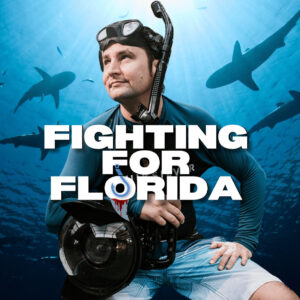 I showed up at Ringling College’s Larry Thompson Academic Building—familiar ground for me as a student—but the energy felt different. The theater was full. Packed, actually. People showed up for this one. Because this isn’t just a film; it’s about our waters. As a diver and someone who recently got my ten-year-old daughter into diving, this one hit close.
The film was created by underwater photographer Wilson McCourtney, and from the very first frame, you’re in it. Beautiful footage—manatees, dolphins, sharks—the kind of imagery that reminds you why the ocean is worth protecting.
 But then it shifts. You start seeing what’s really happening—sharks being finned. And I’ll be honest: Some of those scenes, I couldn’t even keep my eyes on the screen. We’re talking about millions of sharks killed for their fins alone. And the rest of their bodies? Discarded. All for something as simple and as disposable as shark fin soup. I don’t even eat the stuff.
And here’s the part that really lands. Florida is a major hub in all of this. At the same time, we’re dealing with red tide, toxic waters and ongoing environmental damage that many people are only just starting to understand. I remember living in St. Pete during a red tide outbreak. The smell—the dead fish—the water. You don’t forget that.
After the screening, I spoke with director Wilson McCourtney about the film and what comes next.

Wilson McCourtney | Photo: Murphy
Wilson McCourtney: The next story hasn’t really hit me. There’s obviously some conservation missions I’m working on to protect sharks like ending land-based shark fishing, but it hasn’t necessarily developed into a movie yet. I’m sort-of just letting the universe tell me when it’s time, and when the next story appears, I’ll know it. I trust my gut and my instinct, and I follow my heart a lot. That’s never proven me wrong, so I’m just going to continue with that path.
RM: He’s also taking this message directly to younger audiences, something that’s clearly personal for him.
WM: Yeah. I love kids and I love the youth because they are pure and they’re not as jaded as adults are. You know what I mean? They see things for immediately how it is, and they don’t have ulterior motives. Kids are pure-hearted, and I have a way to connect with them because I have three boys. There’s a wavelength of curiosity that comes with the natural world and making art that just shines through kids, and I’m able to tap into that. It’s their wounded planet that we’re handing off to them, so it’s our duty to make sure that they’re in a good spot and they have all the tools necessary to learn how to protect these sacred places so that, when they have kids, we can continue the trend and pass it on down. Otherwise, there won’t be anything left for my grandchildren.
RM: And I asked him something I’ve been thinking about a lot—what role creatives, artists and storytellers can play in all of this.
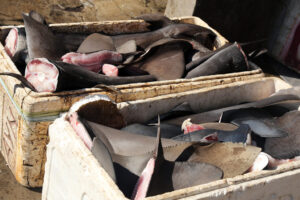
Sharks are killed just for their fins | Photo: Fighting for Florida
WM: People can spend more time in the ocean, learn about becoming a diver, get close to the wildlife and just be inspired. When you see an injustice in the world, pick up your camera. Get loud, use your voice and don’t be scared about the backlash, because the more talented voices we have out there fighting for the right causes, that’s how we’re going to create change.
RM: Because that’s really what this film is doing. It’s not just showing a problem; it’s using art to make people really feel it. And as a diver—and as a mom—I can’t help thinking about the world we’re leaving behind.
But films like “Fighting for Florida”? They’re a reminder that people are paying attention, that people are fighting and that storytelling still has the power to move things forward.
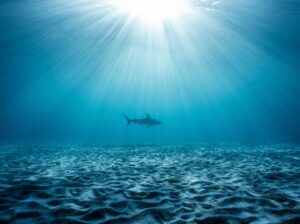
Photo: Fighting for Florida
For WSLR, I’m Rhatia Murphy.
WSLR News aims to keep the local community informed with our 1/2 hour local news show, quarterly newspaper and social media feeds. The local news broadcast airs on Wednesdays and Fridays at 6pm.
 It's drive week!
Your gift keeps 96.5 on the air. Be one of the people who make it happen.
Donate Now
It's drive week!
Your gift keeps 96.5 on the air. Be one of the people who make it happen.
Donate Now