As the Tropical Smoothie owner rebuilds, he reflects on the suicide of a 19-year old fellow detainee.
By Ramon Lopez
Original Air Date: July 1, 2026
Host: In a WSLR exclusive, our reporter Ramon Lopez interviewed a Canadian businessman who spent time at the now-shuttered Everglades immigrant detention center before U.S. authorities deported him. In part one, we reported Doug Dixon’s arrest, detention and deportation. Here is part two: What is next for Dixon and his family?
Ramon Lopez: On April 15, 61-year-old Douglas Dixon was transported by ICE federal agents from Florida’s Glades County Detention Center to Miami International Airport in handcuffs. There, he was loaded aboard a commercial jetliner bound for Toronto.
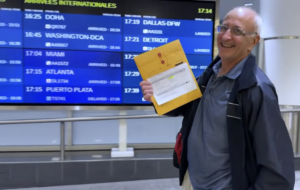
Douglas Dixon arriving safely in Toronto. | Screenshot via CTV
The green-carded Canadian grandfather had lived and worked in Southwest Florida for over two decades. But he was deported for failing to pay $12,000 in Florida sales tax. The aggravated felony prompted inclusion in President Trump’s immigration crackdown. And he is among the 1,000 immigrants who continue to be deported each day.
His freedom flight ended 62 days of imprisonment, including nine in the infamous Alligator Alcatraz, now shut down for good. Although now a free man, Doug Dixon faces an uncertain future away from his family, which remains in Naples.
WSLR News conducted an exclusive phone interview with Doug Dixon, who’s now in Montreal.
Our previous report described Dixon’s February 15 arrest by ICE, his time behind bars and his ultimate release. This followup report describes how life for the Dixon family has been turned upside-down.
His Tropical Smoothie shop in Port Charlotte shut down during the COVID pandemic. No money was coming in, so some state sales tax payments were missed. He worked as a DoorDash driver delivering food, but it wasn’t enough to make ends meet.
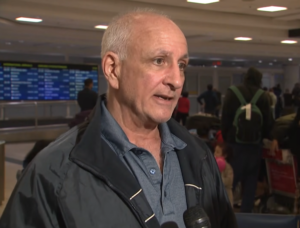
Douglas Dixon | Screenshot via CTV
Doug Dixon: We didn’t have an extravagant lifestyle. It was difficult financially for sure because I had to meet all the obligations—car payments, house payments and all the rest. All in all, I guess I wasn’t able to get out of that hole.
RL: Now the amateur hockey player is rebuilding his life in Canada, with help from family and friends.
DD: I’m living with my sister-in-law at the moment. I was living with my sister. I’m house-surfing. I’ll be going to live with some friends in a little while. I just don’t want to sit permanent and disrupt other people’s lives until I get my feet back on the ground. Right now, I’m doing DoorDash because it’s the only thing that I could do right away, so I’m DoorDashing right now for some income. I didn’t have all my credentials; I didn’t have my Medicare card, I didn’t have my driver’s license—I didn’t have all that stuff when I arrived. So I got my driver’s license, and that allowed me to do DoorDash. But I still haven’t received my medical insurance card because they’ve got a waiting period. They have to make sure you’re not coming into the country and using the facility and leaving. So there’s a waiting period on that. Still waiting on that. Money-wise, I have friends who are helping me out to survive—giving me a way to get back on my feet—but eventually, I’ll have to get a real job—a nine to five—and get everything started over again.
RL: Claiming government services owed the Canadian citizen has been difficult. Doug said refugees and asylum seekers are better off.
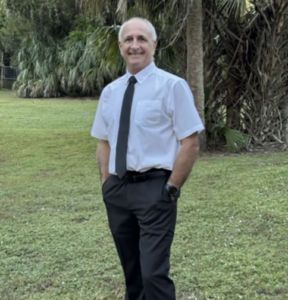
Photo courtesy of the Dixon family
DD: You would be better off being a refugee than you would somebody such as myself—a Canadian—because the programs are not designed for people like me because these things don’t happen. That’s not why they designed the system. They are designed for refugee people—for asylum seekers. The systems are tailored towards those people, so when I go for, let’s say, housing, I’m a Canadian, so the housing things that would apply to somebody who’s an asylum seeker—the rules are different. It’s not made for Canadians to come back to Canada, per se. The system’s made for those other people. Has it been difficult? Yes, it’s been difficult and frustrating on that end, but it’s understandable.
RL: Meanwhile, life is tough for his wife Joann back in Naples.
DD: Like everything else, it’s not going the way it was expected. We thought we would be able to just sell all of our belongings and then she could come up here, but the sale of belongings is not as easy as it sounds. She’s in the process of completing that. That’s her status right now. She’s got a lot of financial difficulties right now because the breadwinner was me. She was a housewife. She didn’t really work. At this stage, we were kind-of retired. We didn’t need, like I said, much to make a lifestyle, so what we lived on was my money that I was making. We were quite happy in that scenario, and then all of a sudden the breadwinner—me—is taken away. She’s basically been supported from friends and family right now. That’s how she’s making ends meet.
RL: Dixon was advised by his lawyer to self-deport to Canada.

Playing hockey with fellow Canadians in Florida. | Photo courtesy Dixon family
DD: I had the opportunity to contest it, but if I contested it, then I’m going to be sitting in there for even longer because you’ve got to wait until your next hearing date. My attorney said, “You could die in there, so I would suggest you just tell them we’re not going to contest it. We’re just going to say, ‘Give us a deportation date.’” So, in that third hearing, that’s exactly what was done.
RL: We asked him if that was the right decision.
DD: Had we been able to fight in front of a non-biased immigration judge, I do believe it was the wrong decision, but there’s two reasons why we didn’t. First of all, we don’t have enough money to be able to fight it, and we didn’t have enough time—me, physically—to be able to wait until I was able to fight. Because it became a federal aggravated felony, all of my relief from bond and those kinds of things was not available to me. I couldn’t get any of that because of it being an aggravated felony.
RL: Was Dixon treated fairly? Was he provided all his legal rights?
DD: The answer to that is a big no. It was not the proper way that the case could have or should have been handled. But again, this judge was not there to see justice being done. He was there to meet a quota, and that’s the types of decisions that he was making. On the day of my hearing, all 26 of us—not one person out of that entire group was granted bond. They’re doing this every day, and the word back in the dorms was nobody’s getting bond. These judges are not giving bond to anybody.
RL: Dixon has had plenty of time to reflect on Alligator Alcatraz. One thing, in particular, sticks in his mind: the suicide.
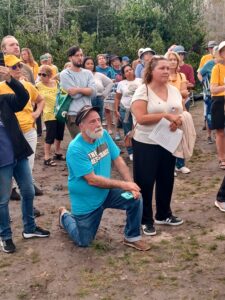
Protest at the detention center. | Photo by Ramon Lopez
DD: We had a lot more—and there are things that I’ve forgotten, I’ve tried to block out. There’s a lot of other things that transpired while I was in there, but I was in the dorm next to the young Mexican boy—the 19-year-old that hung himself. We were woken up in the middle of the night—3 a.m. 19, he takes his life. That’s what happened.
RL: What was the reaction amongst the detainees?
DD: They were all stunned. They were all in shock. They couldn’t believe that that would have happened.
RL: Could you have believed that a 19-year-old would commit suicide under those circumstances?
DD: I could see how he could be driven to that because of the treatment, but 19, you’ve got such a life ahead of you that, no matter what bottom of the barrel you’re at, there’s always a way to get out. It was just a shame that this poor gentleman thought that there was nothing left for him on this planet to be able to stand up again. I really felt bad that, at 19, you were treated to this extent. I mean, this gentleman was walking around and living a life prior to getting put in there, and now he has no life, so I just found it very tragic.
RL: Dixon is in contact with fellow detainees.
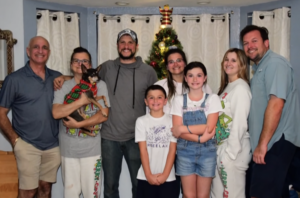
Douglas Dixon and family. | Photo courtesy Dixon family
DD: Yes. I certainly am. That’s why I said, “The Lord works in mysterious ways.” I am still in contact with a few people. One of them is still being detained, and I speak to him once every couple of weeks because his court dates keep going on and on and on, so he’s still in there. But the other ones have been released. They’re all back in their countries. I just wanted to make sure everybody was out or okay.
RL: Alligator Alcatraz is closed, but the roundup of undocumented immigrants continues. Dixon says this is all wrong.
DD: They’re still going to be detaining people, but they’re going to be detaining them for less and less meaningful reasons. Not what they’ve been telling the public. They’ll be picking people up for not renewing their driver’s license, or maybe their paperwork isn’t completed yet so technically they’re still illegal. There’s so many things that they’re grasping at now to keep these centers full. The people that they’re bringing in are not violent criminal gang members. That may have been true in the first month, month and a half, two months, whatever when they put their initial crackdown, but the people they’re bringing in now are just everyday working people. Is there going to be some bad apples in there? Of course. Like any society. But the majority—by majority, I mean 95% to 97% of the people that are in there—are just going about their day.
RL: We asked Dixon if Joann will join him in Canadian exile.
DD: That’s her plan. Her plan is to come up here and be with me, for sure.
RL: Doug says Joann, who is also a Canadian citizen, fears not being allowed back in the US.
DD: That’s precisely why she didn’t join me on the flight. She was not taking the chance that she’d leave the country and then couldn’t get back in, and then all our things are there and she can’t deal with what she has to deal with.
RL: Despite his harsh treatment, Dixon hopes to re-establish his former life in the United States.
DD: My plan, for sure, is to regain my status if possible. My attorney has told me that there are ways to do that, but you can’t do it quickly right now. You have to wait for a bit of time to pass. I have grandchildren there. I have a son and two daughters. They’re not uprooting their lives because Mom and Dad aren’t there. They’re not following us all back to Canada and saying, “Hey, we’re going to start again.” No, no. My family is in Florida, and we’re planning to stay. So, yes, of course I want to go back there and back to the normal life that I had prior to all of this taking place.
RL: Did Dixon believe a green-carded Canadian—a legal resident in the United States—would ever be treated this way?
DD: Never. Not in a million years.
RL: Do you think what happened to you is fair?
DD: No, absolutely not.
RL: Doug Dixon no longer feels that America is “the land of milk and honey” as a result of his treatment, but…
DD: You can’t really make it a black and white scenario because there are certain things that are still good about America, but there are a lot of things that have gone bad—very bad.
RL: Doug Dixon crossed the bridge over troubled waters. So what now for him and his family back in Naples?
DD: Just to get financially established again so that I can continue to fight the fight and get back to normal. Right now, it’s very disorganized. I’m not with the people that I was with daily since the end of February. Phone and Skype calls are not the same as being with somebody and doing things together. From that perspective, I’ve got to get that all back because that’s the way that a normal life progresses. How long that’s going to take, I don’t know. I’d be on the plane and be back there tomorrow, but that’s not the reality of it right now. Unfortunately, that’s not how things are playing out. I’m going to take a while to get back on my feet, and I’m 61. I don’t have the energy and mental capacity that I had when I was in my thirties and twenties.
RL: His story is not only about Trump-style hard-line immigration enforcement and unpaid taxes. It is also about financial hardship and family separation the sudden ending of the life he knew.
For Dixon, the country where he had lived since the mid-2000’s is no longer home for him even though that is where much of his life still remains.
This has been Ramon Lopez with a WSLR News special report.
Amy Bazley, Doug Dixon’s daughter, established a GoFundMe campaign to help her parents out.
WSLR News aims to keep the local community informed with our 1/2 hour local news show, quarterly newspaper and social media feeds. The local news broadcast airs on Wednesdays and Fridays at 6pm.
 It's drive week!
Your gift keeps 96.5 on the air. Be one of the people who make it happen.
Donate Now
It's drive week!
Your gift keeps 96.5 on the air. Be one of the people who make it happen.
Donate Now