Already threatened cypress swamps in Manatee County could shrink even more.
By Brice Claypoole
Original Air Date: December 17, 2025
Host: The Clean Water Act is one of America’s bedrock environmental laws. Since its enactment in 1972, different presidential administrations have interpreted its protections differently. Now the Trump Administration wants to remove protections from over 80% of wetlands under the act. WSLR’s Brice Claypoole explores what that means for Florida.
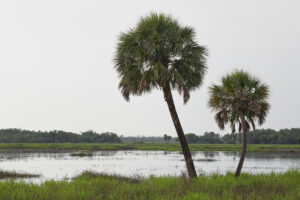
Photo by Brice Claypoole
Brice Claypoole: Presidential administrations’ interpretations of the Clean Water Act have been an exercise in regulatory whiplash for years, with Democrats expanding protections and Republicans shrinking them. Now, President Trump’s Environmental Protection Agency (EPA) wants to gut them. The EPA recently released a proposal that would limit Clean Water Act protections to just 19% of U.S. wetlands. Some states could see protections evaporate for over 97% of wetlands, according to Politico’s E&E News, though numbers for Florida aren’t yet available.
At the core of the changes are new standards requiring that wetlands have continuous surface water connection to waterways, at least during the “wet season,” to be protected. This interpretation is in line with a controversial 2023 Supreme Court decision that wetland protections could only be applied based on physical connection to waterways rather than on ecological impacts like pollution reduction or wildlife habitat.
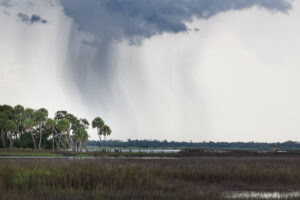
Photo by Brice Claypoole
The decision comes as the EPA pursues what it calls “the biggest deregulation” agenda in U.S. history. It has been hailed by business groups, from agriculture to development, for simplifying regulation. The Suncoast Builders Association did not respond to a request for comment.
Environmental groups, meanwhile, warn that the rollback could lead to widespread destruction of wetlands and increases in water pollution.
Abbey Tyrna is the executive director of Suncoast Waterkeeper and a wetland scientist. She says that Florida’s cypress swamps are a prime example of ecosystems that will lose protections because they aren’t directly connected to waterways.

Dr. Abbey Tyrna
Abbey Tyrna: There are so many cypress swamps from Manatee County all the way to Georgia, and they are all isolated. They’re all just little depressions filled with cypress trees, and they’re everywhere, but they are also one of the first wetlands that have gone away. Cypress wetlands are imperiled. So, there’s no more protection for them. I mean, that was when they had protection, so imagine what’s going to happen with no protection. It’s going to get worse.
BC: Tyrna also gives an example of how the new rules will impact local landscapes.
AT: Think of Myakka. Have you ever been to Myakka State Park? You’ve run up on these landscapes that look different; they’re holding a little bit of water, maybe. Those are the vast majority of wetlands in the state of Florida, and those are not connected on the surface; they’re connected underground. Basically, all of Myakka except for the two manmade lakes and the river would no longer be protected.
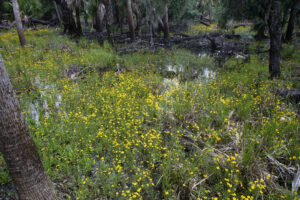
Photo by Brice Claypoole
BC: To be sure, the story is far from over. The Environmental Protection Agency will be accepting comments on the proposed rule change until January 5. Meanwhile, the U.S. House of Representatives recently passed a bill to weaken the Clean Water Act further, and the Florida Legislature is working on its own proposals to dilute environmental laws. How will it all impact our state? Stay tuned.
For WSLR News, this is Brice Claypoole.
Host: Disclosure: Brice Claypoole is a board member of Suncoast Waterkeeper. He is not involved in the Waterkeeper Alliance’s opposition to the proposed rule changes.
WSLR News aims to keep the local community informed with our 1/2 hour local news show, quarterly newspaper and social media feeds. The local news broadcast airs on Wednesdays and Fridays at 6pm.