Some celebrate Nicolás Maduro’s removal. Luis Velásquez is not among them.
By Johannes Werner
Original Air Date: January 7, 2026
Host: On the streets of Weston and Doral, the South Florida suburbs with the highest concentration of Venezuelan immigrants and exiles, many responded to the removal of Nicolás Maduro by U.S. armed forces with an outburst of joy and hope. Things have been quieter on this side of Florida. WSLR News talked to a Venezuelan exile in Bradenton who is much more skeptical.
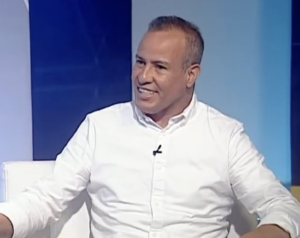
Opposition politician Luis Velásquez chaired the city council of Caracas, before being accused of ‘treason’. He now lives in Bradenton and is seeking asylum. Still shot Venevision
Johannes Werner: In 2010, Luis Velásquez ran as an opposition candidate for the cabildo of the capital city of Caracas. He was elected by landslide, and by 2011, he chaired the council that runs the country’s biggest metropolitan area. The national government eventually removed Velásquez and his opposition peers from the cabildo. And in 2021, a Venezuelan court arraigned him over “treason of the fatherland.”
Velásquez did not wait for his hearing. He fled the country with his family and ended up in Bradenton, where he now drives Uber, trying to make a living while helping opposition candidates in Venezuela campaign for office.

Last weekend, the Trump administration forcibly removed Nicolás Maduro from Venezuela and put him on trial in New York.
He applied for political asylum, but the U.S. government rejected him last fall. He appealed, and his next hearing is set for December this year.
He condemns the bombing of Venezuela and what he calls the kidnapping of Maduro.
Luis Velásquez: I am someone who is radically opposed to Chavismo. I have radically confronted it publicly. In my country, I have been a victim of its persecution. I have been a victim of its, let’s say, humanity. But that is one thing, and another thing is to support any action against the country where I was born—against my country. I am not in favor of that under any circumstances. Under any circumstances, wherever it comes from. Unfortunately—and I say “unfortunately” because my immigration status right now does not help me at all—I am in this country and obviously I respect their position, but I do not share it, much less that of a government that, in my opinion, is against humanity.
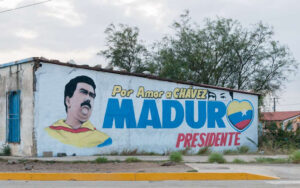
Velásquez: ‘In Venezuela, there is no political leadership capable of replacing Chavismo under the current conditions, and that is the truth. Anyone who says otherwise is lying, because there is no real opposition organization capable of taking control of this situation.’ Photo courtesy PICRYL
JW: The rejection of asylum aside, the Trump administration last month lifted the “Temporary Protected Status” on some 600,000 Venezuelans in the United States and encouraged them to go back to Venezuela. But Velásquez is skeptical about a mismatch between Trump’s rhetoric and the stark realities on the ground in Venezuela, where Delcy Rodríguez, Maduro’s vice president, has taken the reins, and where the economy is in shambles.
LV: In Venezuela, there is no political leadership capable of replacing Chavismo under the current conditions, and that is the truth. Anyone who says otherwise is lying, because there is no real opposition organization capable of taking control of this situation. But it put the government in a state of shock. I don’t know how the Chavista government will respond, and I’m not only concerned about the external response, which is already significant, but also about the government’s internal response, which is quite dangerous. Placing an entire population under suspicion could be very dangerous for our fellow citizens. In economic terms, obviously, no war generates economic growth for a country, much less a country that has already been under sanctions for more than 15 years, with a blockade, with a very damaging position against it, where it has had to reinvent itself and has had to create many legal and even illegal things in order to survive.
JW: Given the uncertainty on the ground in Venezuela, Velásquez’ biggest worry is about the Venezuelans already in ICE deportation detention here. ICE does not share current numbers, but it could mean thousands are stuck in limbo and could face time behind bars with no end in sight.
LV: What will be the fate of the Venezuelans who are currently detained in those immigration centers, who cannot be deported to Venezuela at this time? I say they cannot be deported to Venezuela. What will be the fate of all these compatriots who are there waiting to be released because their only crime was perhaps to have crossed five or ten borders throughout the American continent in search of a better quality of life for themselves and their families, and who today find themselves in vulnerable situations?
JW: He also fears that, if Venezuela and the United States enter a state of war, Venezuelans here could face a similar fate as Japanese immigrants after Pearl Harbor.
Reporting for WSLR News, Johannes Werner.
WSLR News aims to keep the local community informed with our 1/2 hour local news show, quarterly newspaper and social media feeds. The local news broadcast airs on Wednesdays and Fridays at 6pm.