For the sake of her children, she decided to move from Bradenton. Now, she feels her family is a target for ICE.
By Johannes Werner
Original Air Date: February 4, 2026
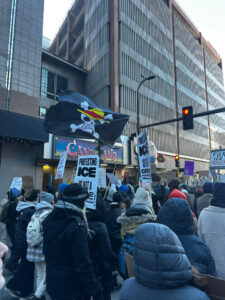
Anti ICE protest this Saturday in downtown Minneapolis. Photo by Balquisa Booker
Host: Operation Metro Surge in Minneapolis, culminating in the killing of two local ICE watchers, and the local pushback are making national headlines. WSLR News talked to a Somali immigrant who moved to Minnesota from Bradenton, and to her niece who is part of what she describes as a neighborhood network that tracks ICE raids and detainees. Here is how they describe life in Minneapolis for people with immigrant backgrounds.
Johannes Werner: Lul Kassim lived in Bradenton and worked here as a nurse practitioner. She came to the United States as a teenager. Born in Somalia, her family fled the civil war, spent time in refugee camps in Kenya, applied to asylum with the United States, and were eventually admitted. She is now a U.S. citizen.
When she had her first child five years ago, she and her German husband decided to spend part of the year in Bradenton, part in Berlin. Eventually, she decided to fully settle in Minneapolis. The reason: Minneapolis seemed like a better place to raise her children.
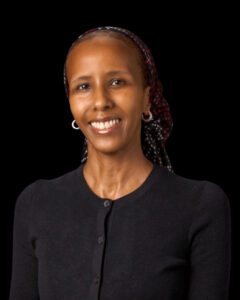
Lul Kassim
Lul Kassim: Most of my family lives here, so that was one thing. It’s a little difficult to go to work, and with small children, you also need the family support—babysitting and whatnot—so that was one. The other decision we came back is the family coming back here and then the education system.
JW: Lul Kassim has been working as a nurse in Minneapolis since then, and she had a second child. Then, two months ago, the Trump administration began Operation Metro Surge. How has this changed her daily life?
LK: Well, you better have your passport with you when you go into the stores. I have cut down, I would say, 75% of all my activities. Last weekend is when Alex was murdered, and they were very aggressive. They were very present. They were lurking around everywhere. They were lurking around where I work, which is 20 minutes from here—Woodbury—and it wasn’t safe for me to go to work, so then I decided whether I work from home or I just stay. And I stayed home. And my job is very supportive of us. They told me, “If you feel unsafe or if you feel like there is so much presence of them, you can just stay home.” Now, it’s like, you really don’t want to go outside unless you absolutely need to go outside. Even the gas station, I make sure my husband is here. He comes with me to go to the gas station. It’s such a planning you have to do.
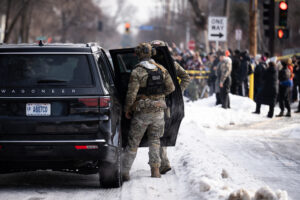
Photo by Chad Davis via Wikimedia Commons
JW: She feels Somali immigrants, one of the largest minority groups in Minneapolis, are a target of ICE. And she’s puzzled about it—most of them are U.S. citizens or are on a path to citizenship.
LK: Then I heard they were going into a very concentrated Somali mall in the Somali area, and they were getting really aggressive. And the stories—every time they grabbed a citizen and they didn’t know if he was a citizen and then they detained the citizen. The first time, I think, was a Somali 22-year-old, and he was a U.S. citizen, so he came here when he was five or something. That was odd.
JW: Maryam Mohamad is Lul Kassim’s niece. She feels pretty much everyone in Minneapolis now feels like a potential target.
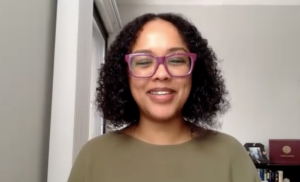
Maryam Mohamad
Maryam Mohamad: I feel that, at the beginning of all of this—of Operation Metro Surge—the fear of leaving your home was mostly for those who may not have status as American citizens. Now, we know that ICE agents are racially profiling people based on their looks and detaining them regardless of their immigration status, so the fear has spread outside of immigrant communities to everybody in the Twin Cities area.
JW: Maryam Mohamad has a job in marketing. When she is not working, she goes to protests to observe and take pictures. And she is involved with what she describes as neighborhood networks keeping track of ICE.
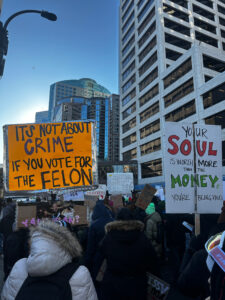
Photo by Balquisa Booker
MM: Many of these networks are neighborhood based. It’s you, your neighbors, maybe a few people who work in your neighborhood on Signal chats. So these are small group chats. Probably most of them are like 50 people. These aren’t wide networks because there is a little bit of “need to know who you are” to be in these chats, and who knows you better than your neighbors? So people are organizing. When they see an ICE vehicle, they ask people to be there to document what’s going on and to also document who is being apprehended—who is being detained—because there’s not a lot of transparency into these operations. If we are not the ones keeping track of who is being detained and how to get them back out, then we’re not sure if we will be able to know where they end up.
JW: Renee Good was part of one of those neighborhood Signal groups when she was killed by an ICE agent.
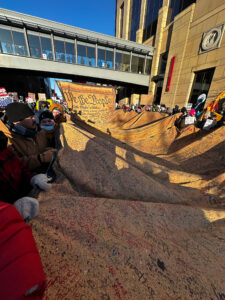
Photo by Balquisa Booker
MM: She was a confirmed observer, so she was there to see what they were doing. She was in her vehicle at the time when she was killed, and there are a lot of people still, despite the fear that they might be shot and killed by ICE, doing this work, because it’s very important to ensure that our neighbors are safe.
JW: Asked about where they see their future, both Lul and Maryam are adamant that the United States and Minneapolis is home. Lul says she actually feels heartened by her neighbors’ and colleagues’ reaction. Donald Trump’s efforts to divide Americans, as she sees it, are backfiring.
LK: You know, Somali—we’re not going anywhere. We’re as American as he is. This is our country. I gave birth to my kids here. My parents are buried here. My nieces, nephews are all born here. Where are we supposed to go?
We have to continue to show up, go to work and talk to our neighbors. He’s trying to divide the people of Minnesota, and he can’t. People are together. Our neighbors, they always check on me, check on my kids, how I am. They all love each other. So there’s nothing he can do. There’s nothing he can say that would—it actually is causing the opposite of what he was hoping for.
JW: Reporting for WSLR News, Johannes Werner. To listen to a long-form version of the interviews with Lul Kassim and Maryam Mohamad, tune in this Friday, 6 p.m.
WSLR News aims to keep the local community informed with our 1/2 hour local news show, quarterly newspaper and social media feeds. The local news broadcast airs on Wednesdays and Fridays at 6pm.