This after-school program teaches Booker students the ins and outs of the food industry.
By Jackson Rothman
Original Air Date: February 25, 2026
Host: Sarasota’s Booker Middle and High are home to a school-based experiment in gastronomy. Jackson Rothman gives us a taste of Scratch Made Kitchen.
Gordon Gregory: On top of the pancake and flip it.
Andrew Grossman: What about the lemon? When does that go in?
GG: The lemon zest can go in there now.
AG: And the juice?
GG: Yes.
JR: There is nowhere to hide from the wall of sound in this kitchen. The scene: A chef, a group of entrepreneurial teens, and the man who brought them all together, working in chaotic harmony. Spoons meet bowls, spatulas slide across skillets, and dots connect for students, many of whom are being introduced to a potential culinary career path for the first time.
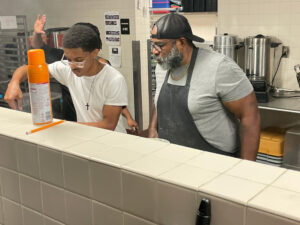
Gordon Gregory, AKA Chef G. | Photo by Jackson Rothman
This is Scratch Made Kitchen, an after-school program that teaches students practical skills for cooking, and the economics behind it. Scratch Made currently operates out of the Tornado Kitchen at Booker High School and Booker Bakery at Booker Middle. Participants meet weekly over the course of two yearly semester sessions.
Over the course of two days, WSLR visited Booker Middle and High and spoke with the people behind the program. Scratch Made Kitchen is led by Andrew Grossman, an entrepreneur in his own right, who brings a lifetime of experience in the world of restaurants and food sales. Andrew has touched almost every aspect of the food industry in his career and even is a certified sommelier. But Andrew always wanted to find a way to give back to the industry he dedicated his life to. After selling his business and relocating to Sarasota, Andrew found his calling.
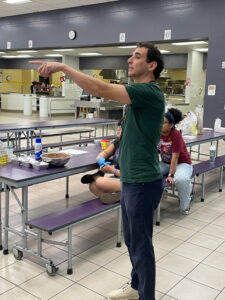
Andrew Grossman | Photo by Jackson Rothman
AG: I’m Andrew Grossman. My background is front-of-the-house restaurants, wholesale, service industry since I was 15 years old. Scratch Made was a non-profit that I started when the Sarasota County School Board came to me and asked if I could help them implement an after-school culinary program that they used to have.
JR: The program has dual functions; teaching students cooking skills, and understanding the math behind it. Students prepare their own meals, mainly from scratch with guidance from Andrew and his partner in the program, Gordon Gregory, a.k.a. Chef G. Students then portion out and price their creations, developing a better understanding of the economics of the food industry.
The Booker Bakery at Booker Middle School is still relatively new, only in its second year of operation. Andrew spoke to me about the growth the program has seen.
AG: We had 50 sixth graders last semester, and this semester we have 25 seventh and eighth graders. In the original pilot, we had about 30 kids. The reason we had to do two groups is we had 150 students sign up who wanted to do it. We wound up selecting students based on who was able to get their permission slips in to us and show that follow through and commitment to the program.
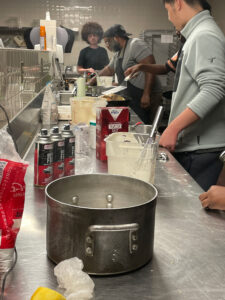
Photo by Jackson Rothman
JR: The Tornado Kitchen at Booker High has seen similar growth.
AG: We started with eight in a pre-incubator program. Then we had 12, and then 16, now it’s 25 and we have a waitlist. We take 25 of the 50 or 60 that apply.
JR: Tornado Kitchen also provides more focus on the vocational, with students building business plans and developing quasi-professional experience.
AG: That all culminates into our second semester program where we conceptualize a restaurant from scratch, write a business plan, put that plan into action and then open a restaurant for a night in the Booker High cafeteria. We had about 50 to 60 people come. We do different seating so it’s like an actual restaurant. They put in so much love and take it so seriously, and the results show. It’s been a phenomenal success the last two years. We’ll do the next one this April and hope to have similar results.
JR: If Andrew is the head of the operation, Chef G is the heart.
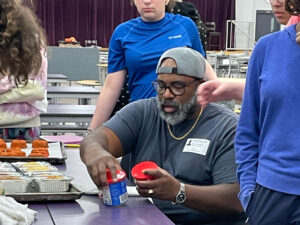
Gordon “Chef G” Gregory | Photo by Jackson Rothman
GG: My name is Gordon Gregory. I got involved by Andrew promising me ten thousand dollars a week. [laughter] I got involved because I felt there was a need for more education on how students can get involved in the culinary space and not automatically think they have to go to McDonald’s or to Wendy’s—not to name drop or anything like that—but you don’t have to be a fast food worker in order to work in the culinary space.
I’m a restaurateur. Food trucks, private catering, private chef. I was chef for Leonard Fournette during his Super Bowl run. I’m chef for West Coast Black Theatre Troupe. I do their cast parties, their opening parties—really, any time they have anything food-wise, they usually call me.
JR: Chef G is a Sarasota native and graduate of Booker. His roots in the community run deep.
GG: I graduated from Booker High, plus both my kids, my son and my daughter both went through the Booker Trio, they went to Booker Elementary, Booker Middle and graduated from Booker High School. Being able to come back here to Booker Middle and being able to provide something for the next generation is always a plus for me.
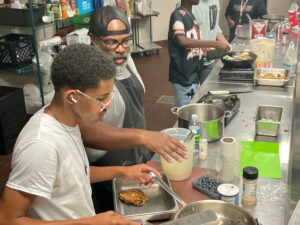
Photo by Jackson Rothman
AG: There is no program without Chef G. He’s from the community. His children graduated from Booker. He’s not only a talented chef, but his patience and his ability to teach, which I feel like sometimes is missing in the community, is passing on the skills. It’s one thing to be a great chef, it’s another to be able to teach systems and have consistency in a restaurant, and he’s just amazing at that.
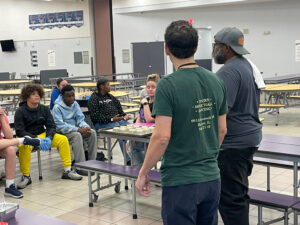
JR: Chef G owns and operates G’s Southern Kitchen, a food truck serving soul food and fried chicken. This is Chef G’s first time working in a formal training program, and he finds it rewarding to learn alongside his students. He takes great care to ensure students know what they are doing and the why behind it.
Grossman and Chef G | Photo by Jackson Rothman
GG: I taught my daughter. I taught my son. When folks would come to the restaurant, I’d put them through a tumultuous training for my recipes because they had to be a certain way. But this—dealing with students—is a first time. It’s a learning curve because you have to really hone in and pay attention to how you’re saying things and making sure you’re explaining instructions to them in a way that makes sense to them, not just to say “Hey, do this” and expect them to do it. You’ve got to really break it down for them so they really understand why they’re doing what they’re doing.
JR: Chef G recently moved to the Orlando area but continues to be involved with Scratch Made. Every week he drives down from Orlando and stays overnight in town to be able to make both days of the program. His dedication is not lost on Andrew or the students.
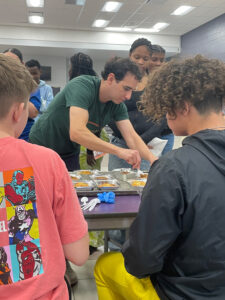
Photo by Jackson Rothman
Andrew’s life journey across the country inspired his love of the food industry. Living in food capitals like New Orleans, Chicago and Kansas City provided a diverse skillset he builds on with his businesses and Scratch Made. His enterprises helped teach him the lessons and skills that brought him success, and he hopes to pass them on to the students in the program.
GG: We actually had three students from our middle school from last year’s club now in our high school club. We also had two students from our high school club that actually got internships while they were in the club and then moved on to culinary jobs once they graduated.
AG: You might not even know this. We’ve had four students go from our program into Suncoast Technical College’s culinary arts program, which is the post-graduate education. We’ve had about six students take jobs at our partner restaurants like Gecko’s, and then more than we can count up to as recently as last week who have taken jobs in the restaurant industry as supplemental income while they finish high school.
JR: Scratch Made Kitchen is a grassroots organization, with funding coming primarily from grants, with donors such as the Henson Fund and Gulf Coast Community Foundation and support from Sarasota Public Schools. Putting on the program is a community effort.
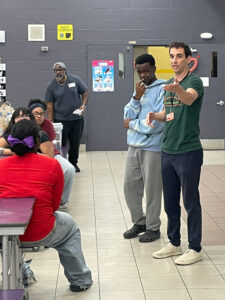
Photo by Jackson Rothman
AG: The school district has been extremely helpful donating the space and some small supplies. The other funds—it’s pretty bootstrapped right now. We run it on a pretty tight budget. We look to get a lot of food donated—for example, the cookies at Detweiler’s—and the rest of the additional funds come from the community. We really rely on private grants from the foundations and also individual donors.
JR: Andrew has bigger plans for the program. His long-term goal is for Scratch Made to eventually become a career technical education pathway offered in the school curriculum. But for now, he’s looking to expand into more local schools. Scratch Made is also looking to establish new community partnerships to gather more resources for the program.
Andrew hopes to offer students the opportunities to see what potential careers are possible in the food and restaurant industry, and help strengthen the local economy.
AG: The service, hospitality, hotel industry is one of the largest employers in the state of Florida. We really want to try to meet that demand and get students interested in that and know that this isn’t a career you do while you wait for your other career to happen. You can make a career out of this. You can make six figures being a director of operations for a giant restaurant chain. You can go into hospitality or hotel management and have a secure job with a 401k and insurance. We want people to understand all the variety of paths, or you can be an entrepreneur and start your own restaurant right here in Sarasota.
JR: For WSLR, Jackson Rothman.
WSLR News aims to keep the local community informed with our 1/2 hour local news show, quarterly newspaper and social media feeds. The local news broadcast airs on Wednesdays and Fridays at 6pm.